 Today, Carol interviews Rose Park and Kate Flom from Advocates for Human Rights about their work to end violence against women around the world.
You can listen to the show here
Links

Today, Carol interviews Rose Park and Kate Flom from Advocates for Human Rights about their work to end violence against women around the world.
You can listen to the show here
Links
Carol talks about successful prevention programs in two schools systems.
You can listen to the show here
Need to find a local sexual assault or rape crisis center near your school? Look at the Virginia Sexual and Domestic Violence Action Alliance List of Member Agencies to find local centers.


_____________________________________________________________________________________
Training from End Violence Against Women International
|
One of the most common requests we receive is for resources associated with the neurobiology of trauma, and the implications for trauma-informed interviews, investigations, and prosecutions. We would like to take this opportunity to highlight some of the training and technical assistance resources we offer in this area.
Webinar on Neurobiology
 We are delighted to offer a 90-minute webinar given by Dr. Rebecca Campbell on The Neurobiology of Sexual Assault. It is available for free in our webinar archives, so it can be accessed at any time. We are delighted to offer a 90-minute webinar given by Dr. Rebecca Campbell on The Neurobiology of Sexual Assault. It is available for free in our webinar archives, so it can be accessed at any time.Participants will learn about the neurobiology of trauma and its application to victims of sexual assault. By exploring how trauma affects victims’ emotions and behavior, special attention will be given to examining how the brain processes and recalls traumatic events. This will help law enforcement personnel and other professionals recognize how these concepts can be applied to sexual assault investigations and prosecutions – with the goal of improving both victim well-being and case success. Webinars on Victim Interviewing Also available is an archived webinar by Russell Strand, entitled A Paradigm Shift: The Forensic Experiential Trauma Interview (FETI). This webinar provides information on the neurobiology of trauma and the implications for successfully interviewing sexual assault victims. We also have an archived webinar on Effective Victim Interviewing, presented by Roger Canaff and Joanne Archambault. While it does not specifically address the neurobiology of trauma and its implications, valuable guidance is provided for successfully interviewing victims of sexual assault with an eye toward criminal prosecution. Published Articles Dr. Hopper also co-authored an article with Dr. David Lisak, entitled: “Why Rape and Trauma Survivors Have Fragmented and Incomplete Memories.” This article was posted on Time.com, and it also provides a detailed yet accessible explanation of how trauma can impact behavior and memory. The article draws helpful parallels to the scenario where a police officer is “suddenly staring at the wrong end of a gun.” Online Resources
OLTI Module on Victim Interviewing
We offer an OnLine Training Institute (OLTI) module onInterviewing the Victim: Techniques Based on the Realistic Dynamics of Sexual Assault. This module was written in 2007, and although we made updates in 2013 we have not yet incorporated information on the neurobiology of sexual assault and trauma-informed approaches. Nonetheless, we recommend this training module, because it offers hundreds of pages with detailed information on topics such as:
For victims who have a disability, even more detailed guidance is provided in the OLTI module on Successfully Investigating Sexual Assault Against Victims with Disabilities. The only section of the Victim Interviewing module that requires caution at this point is the topic of Cognitive Interviewing. There are certainly some valuable lessons to be learned from that approach, and there is a body of research supporting its use for certain purposes, but we caution that it should not be adopted wholesale for use with sexual assault victims. When we update that module and incorporate information on trauma-informed approaches we will reduce that content and frame its utility in somewhat narrower terms (e.g., recalling specific facts, events, details). |
_____________________________________________________________________________________
Other State and National Training Opportunities
National Children’s Advocacy Center – Virtual Training Center. Various free online training opportunities.
Enhancing the Campus & Community Response to Adult Sexual Assault: A Team Approach. Free. Hosted by the Virginia Department of Criminal Justice Services. Monday, August 31, 2015 – Tuesday, September 1, 2015 — Hampden-Sydney, VA Wednesday, September 2, 2015 – Thursday, September 3, 2015 — Williamsburg, VA
National Sexual Assault Conference. September 2-4, Los Angeles, CA, $475 and up (transportation, lodging, and most meals not included), Hosted by CALCASA, NSVRC, and PCAR {Scholarships available}
reposted from the Virginia Sexual and Domestic Violence Action Alliance and End Violence Against Women International
Today’s show is about the new sexual assault laws going into effect this month across Virginia.
You can listen to the show here
HB 1785. Campus police departments; sexual assault reporting. The law requires that mutual aid agreements between a campus police force and a law-enforcement agency require either the campus police force or the agency with which it has established a mutual aid agreement to notify the local attorney for the Commonwealth within 48 hours of beginning any investigation involving felony criminal sexual assault occurring on campus property or other property related to the institution of higher education. The law also requires institutions of higher education that have security departments instead of campus police forces to enter into a memorandum of understanding with a law-enforcement agency that requires similar notification to the local attorney for the Commonwealth.
HB 1930/SB 712. Institutions of higher education; reporting acts of sexual violence. The law requires any responsible employee of a public or private nonprofit institution of higher education who in the course of his employment obtains information that an act of sexual violence has been committed against a student or on campus property or other property related to the institution to report such information to the Title IX coordinator for the institution as soon as practicable, who must in turn report such information to a review committee that is required to meet within 72 hours of the receipt of such information. If the review committee determines that disclosure of the information regarding the alleged act of sexual violence is necessary to protect the health and safety of the victim or other individuals, the information, including personally identifiable information, must be reported to the law-enforcement agency responsible for investigating the alleged act. In addition, the law requires the governing board of each public or private nonprofit institution of higher education to (i) establish a written memorandum of understanding with a local sexual assault crisis center or other victim support service and (ii) adopt policies to provide victims with information on contacting such center or service. The law requires each public or private nonprofit institution of higher education to annually certify to the State Council of Higher Education for Virginia that it has reviewed its sexual violence policy and requires the Department of Criminal Justice Services to monitor and report on the impact of the legislation on the workload of local victim witness programs.
SB 1193. Academic transcripts; suspension, permanent dismissal, or withdrawal from institution. The law requires the registrar of certain public and private institutions of higher education, or the other employee, office, or department of the institution that is responsible for maintaining student academic records, to include a prominent notation on the transcript of each student who has been suspended for, has been permanently dismissed for, or withdraws from the institution while under investigation for an offense involving sexual violence, defined as physical sexual acts committed against a person’s will or against a person incapable of giving consent, under the institution’s code, rules, or set of standards governing student conduct. Any notation due to a student’s suspension must be removed if the student completed the term and conditions of the suspension and has been determined by the institution to be in good standing.
Need to find a local sexual assault or rape crisis center near your school? Look at the Virginia Sexual and Domestic Violence Action Alliance List of Member Agencies to find local centers.
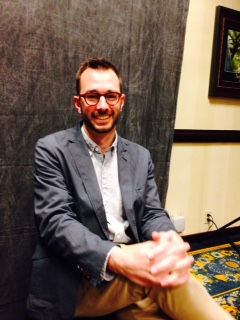
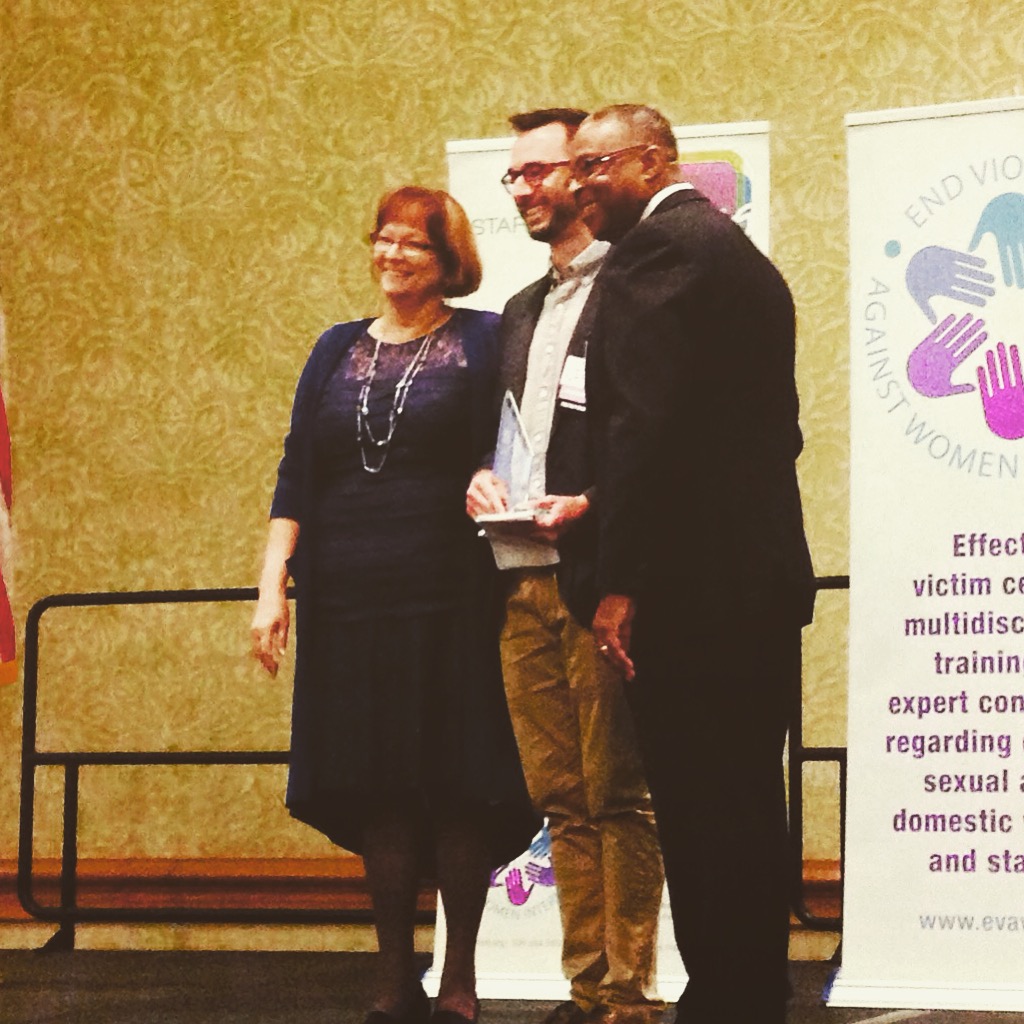
Today Carol interviews John Sutter, journalist from CNN on his report on the prevalence of rape in Alaska. He talks about his journey to see why Alaska has the highest incidence of rape in the nation.
You can listen to the show here
Links:
John Sutter at CNN
WRIR 97.3 FM Richmond Independent Radio
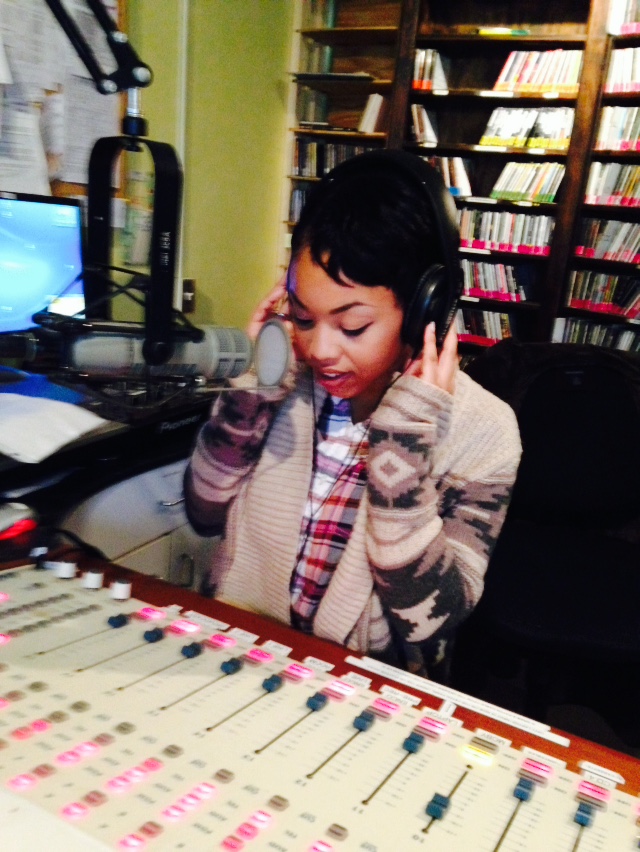
Shekeyah Hayes, student from Virginia Union University, talks about the prevalence and impact of domestic violence on campus.
Virginia Family Violence & Sexual Assault Hotline 1-800-838-8238
Carol talks about new legislation passed in Virginia designed to provide enhanced protections and access to services for survivors of sexual assault on campus.
Listen to the show here
Resources:
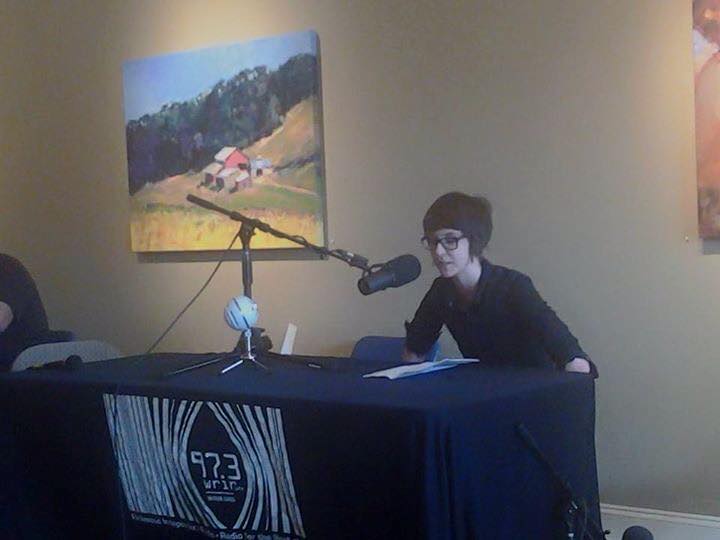
For this episode of the V WORD we recorded live at WRIR’s first Local Voices Live event. During this event the public got to see live some of their favorite shows/modules. The V Word was honored to be part of this event. Jenn read a piece on community accountability from a community activist who is also a black, queer, immigrant, woman.
Please listen to today’s episode here
Transcript here:
Hi my name is Shantae Taylor and I work with JusticeRVA (for racial justice against state sanctioned police violence and mass incarceration), NOACP/Richmond Resistance (for environmental justice) and with RRFP (for reproductive justice). As a queer person of color and immigrant I stand at the intersections of many issues but today I would like to talk about the intersection between state violence, violence against women and how we can create safer communities from the inside out. I want to start first here and talk a little bit about Richmond and then talk about how these issues apply more broadly. I want to be super clear that these issues may be triggering and would like us all to remember that part of accessibility is also keeping each ourselves and each other safe, I will give folks a moment to leave as needed.
-Rape Culture in RVA : I moved to Richmond five years ago and I have so much praise for such an amazing, dynamic and politically active city. However like most places, there is a very strong undercurrent of rape culture. For example, many known restaurants and bars in this city that have well known sexual assaulters and rapists in their midst and there has not as of yet been an city-wide effective campaign to hold those perpetrators accountable – just very brave people doing their best to speak out.
Another example would be our amazing and vibrant punk and hardcore scenes that we love so much. But unfortunately they also suffer from rape culture with it almost being a too common secret. Let us take the example of Dan Cleaves. (I use the example of a white man here to combat the stereotypes thrown against men of color. I also want to be clear that I am in no way using this example to stigmatize against HIV but I do think it is helpful to remember safe sexual practices and to remember that white people get HIV too! It is not just a black or brown problem).Dan Cleaves is a white male who frequented venues in Richmond and was just charged with sexually assaulting and knowingly infecting women with HIV with a particular targeting of transwomen. Many brave Richmonders, survivors included said enough was enough and were eventually able to drive him out of Richmond, but why did it take so long for people to listen to survivors and their wishes? Who is to blame? Are these individual failures or collective failures?
I would argue that these are collective failures. No individual can be solely be responsible for rape culture nor can they be solely responsible for ending it. That does not mean however that people do not need to be accountable for their own actions and take necessary steps to remedy the harm they have caused specific people and the community at large.
I will offer a personal story to help this stick. I am a survivor, however as a black woman I have serious concerns about approaching the police about what happened to me. What if they treat me differently because of my immigration status. How does my black appearance make me dehumanized, thus devalued and more rape-able and not worthy of being saved? How will my community view me? How will I be treated if I present to receive medical care? How does this relate to the long history of sexual violence against black women in this country? How does it relate to the systemic neglect of some black neighborhoods, environmental racism, economic deprivation, the war on drugs and “tough on crime” policing mentality – are these polices making our communities safer for women or more dangerous? How would this change if I were differently-abled? And why would I want to report my assaulter if I know that he would most likely not get proper treatment in jail/prison and more likely get worse after that process?
I think the INCITE! model of violence against women is especially helpful.” INCITE! Women, Gender Non-Conforming, and Trans people of Color* Against Violence is a national activist organization of radical feminists of color advancing a movement to end violence against women of color and our communities through direct action, critical dialogue and grassroots organizing.” INCITE! identifies “violence against women of color” as a combination of “violence directed at communities,” such as police violence, war, and colonialism, and “violence within communities,” such as rape and domestic violence.
They basically argue that if we want safer communities from the inside out we are going to have to be careful how we intermesh with the state in terms of mass incarceration instead of rehabilitative and restorative justice. They especially focus on the effects of violence on marginalized groups like women of color, queer folks, immigrants, incarcerated women and how we can lift their voices in this process. (this includes queer women, transwomen, differently abled and gender non conforming women too, because all women matter). It keeps in mind that violence against women of color often takes many forms from environmental racism to state sanctioned police violence and other structural forms of violence and that they need to be examined in a systemic way and addressed in order to really make solid gains in this process.
-I would argue that if we really want to see changes in rape culture in RVA we need to consider this model. Please connect with organizations such as Safe Harbor, VAVP and others that are working on this. You can read more about INCITE at incite-national.org. Thank you for your time.
Welcome to today’s edition of The V Word
Today’s show is a repost on Human Trafficking.
So here’s a question for those out there. Have you ever tried to coerce or force someone into having sex for money? Has someone ever tried to force or coerce you into having sex for money? Remember my story last week about how often I was approached? How often other women and trans-women were approached? How often children are approached?
My story last week was about the more open and brazen means to recruit someone into sex work. And were you thinking just adults are coerced? And did you imagine the stereotypical idea of a prostitute hanging on a street corner, with a pimp as her manager? You know, the TV image.
Human trafficking for sex is way broader and more pervasive than movies show, and involves more children than people are aware of. Where is this happening you may be asking by now? Not in Richmond you may be hoping. Yes in Richmond. In fact Richmond is listed along with Virginia Beach and Northern Virginia with the highest rates. While it may be focused on the larger cities with major highways, it happens all over the state.
Next you may want to know how it happens.
Traffickers look for people who have vulnerabilities: victims of sexual abuse, children living in poverty, children marginalized in our society by gender, race and economic class, and people who have been made vulnerable after natural disasters.
How does a Trafficker find vulnerable people: You probably did guess this one – through social networking, along with other means. If the parent is already being used as a sex worker, often the children are vulnerable to exploitation.
What happens next, once the Trafficker identifies someone? A process called grooming starts, promises are made to lure someone vulnerable. Another way is for a parent to pimp out their own child or outright sell the child. Yes you heard right, people sell their children and not just because they are evil people but also because they are desperate.
Once in, the victim is used in multiple ways, and not just on the street but through hotels, clubs, escort services, etc.
How does the Trafficker maintain control: isolation from others, shame, physical violence or threats of violence, drugs.
I know you will ask: why doesn’t the victim run away or ask for help? Remember the list of control tactics? All of those create fear and dependency and it’s extremely effective.
How many in Virginia: The Polaris Project reported 375 in a 6 month period. It is suspected it is widely under reported, like most sexual or interpersonal crimes.
So what is Virginia doing? The Virginia General Assembly just passed legislation that harshens the penalties for people who solicit children for sex. It allows felony prosecution now and listing on the sex offender REGISTRY .
.
What are some of the current laws you can use to prosecute such crimes?
§ 18.2-48. Abduction with intent to extort money or for immoral purpose, to extort money or pecuniary benefit, with intent to defile – for the purposes of prostitution, child pornography… is a Class 2 felony which can offer up life imprisonment.
18.2-46 Prostitution: commercial sexual conduct, commercial exploitation of a minor by offering money or its equivalent for the purposes of engaging in sexual acts is a Class 5 or 6 felony.
18.2-355 Taking, detaining, etc a person for prostitution, or being a parent or guardian consents to a person to be taken for prostitution or sex work is guilty of pandering and is a Class 4 felony.
Virginia’s new law will help close the gap and make it easier to prosecute offenders.
Need help or more information? Here are some options…
For information on how to report in the Richmond, Virginia, USA area, you can call the non-emergency line at 804-646-5100, that is 804-646-5100 or go by a local police station office. The main Richmond office is located at 200 West Grace street.
Are you a victim or do you know someone who needs help: The Gray Haven Project is a local resource for survivors of human trafficking. Tel: 804.365.2529 or email to info@thegrayhaven.org
For help with counseling and advocacy, local rape crisis centers and domestic violence shelters can provide services. In Virginia, USA, to find a center closest to you… you can call the Virginia Family Violence and Sexual Assault Hotline, hosted by The Virginia Sexual and Domestic Violence Action Alliance at 1-800-838-8238.
That is the Virginia Family Violence and Sexual Assault Hotline at 1-800-838-8238.
Listening from outside of Virginia? You can call the National Human Trafficking Hotline at 1-800-373-7888 that is 1-800-373-7888 or text 233722
Want to share a story or ask a question? Email me at thevword.radio@gmail.com or tweet me at my twitter account: @preventviolence. You can read the transcript for this show and past shows on my blog at thevword.org
The V Word is recorded in the studios of WRIR-LP 97.3, read and produced by me, Carol Olson.
 Carol Olson
 Jenn
Jenn The V Word