Today Carol talks about the link between sexual assault and addiction.
You can listen to the show here
Links:
Sexual Assault Resources
Virginia Sexual and Domestic Violence Action Alliance
Recovery Resources
Today Carol talks about the link between sexual assault and addiction.
You can listen to the show here
Links:
Sexual Assault Resources
Virginia Sexual and Domestic Violence Action Alliance
Recovery Resources

 Today, Carol interviews Rose Park and Kate Flom from Advocates for Human Rights about their work to end violence against women around the world.
You can listen to the show here
Links
Carol talks about successful prevention programs in two schools systems.
You can listen to the show here
Need to find a local sexual assault or rape crisis center near your school? Look at the Virginia Sexual and Domestic Violence Action Alliance List of Member Agencies to find local centers.


_____________________________________________________________________________________
Training from End Violence Against Women International
|
One of the most common requests we receive is for resources associated with the neurobiology of trauma, and the implications for trauma-informed interviews, investigations, and prosecutions. We would like to take this opportunity to highlight some of the training and technical assistance resources we offer in this area.
Webinar on Neurobiology
 We are delighted to offer a 90-minute webinar given by Dr. Rebecca Campbell on The Neurobiology of Sexual Assault. It is available for free in our webinar archives, so it can be accessed at any time. We are delighted to offer a 90-minute webinar given by Dr. Rebecca Campbell on The Neurobiology of Sexual Assault. It is available for free in our webinar archives, so it can be accessed at any time.Participants will learn about the neurobiology of trauma and its application to victims of sexual assault. By exploring how trauma affects victims’ emotions and behavior, special attention will be given to examining how the brain processes and recalls traumatic events. This will help law enforcement personnel and other professionals recognize how these concepts can be applied to sexual assault investigations and prosecutions – with the goal of improving both victim well-being and case success. Webinars on Victim Interviewing Also available is an archived webinar by Russell Strand, entitled A Paradigm Shift: The Forensic Experiential Trauma Interview (FETI). This webinar provides information on the neurobiology of trauma and the implications for successfully interviewing sexual assault victims. We also have an archived webinar on Effective Victim Interviewing, presented by Roger Canaff and Joanne Archambault. While it does not specifically address the neurobiology of trauma and its implications, valuable guidance is provided for successfully interviewing victims of sexual assault with an eye toward criminal prosecution. Published Articles Dr. Hopper also co-authored an article with Dr. David Lisak, entitled: “Why Rape and Trauma Survivors Have Fragmented and Incomplete Memories.” This article was posted on Time.com, and it also provides a detailed yet accessible explanation of how trauma can impact behavior and memory. The article draws helpful parallels to the scenario where a police officer is “suddenly staring at the wrong end of a gun.” Online Resources
OLTI Module on Victim Interviewing
We offer an OnLine Training Institute (OLTI) module onInterviewing the Victim: Techniques Based on the Realistic Dynamics of Sexual Assault. This module was written in 2007, and although we made updates in 2013 we have not yet incorporated information on the neurobiology of sexual assault and trauma-informed approaches. Nonetheless, we recommend this training module, because it offers hundreds of pages with detailed information on topics such as:
For victims who have a disability, even more detailed guidance is provided in the OLTI module on Successfully Investigating Sexual Assault Against Victims with Disabilities. The only section of the Victim Interviewing module that requires caution at this point is the topic of Cognitive Interviewing. There are certainly some valuable lessons to be learned from that approach, and there is a body of research supporting its use for certain purposes, but we caution that it should not be adopted wholesale for use with sexual assault victims. When we update that module and incorporate information on trauma-informed approaches we will reduce that content and frame its utility in somewhat narrower terms (e.g., recalling specific facts, events, details). |
_____________________________________________________________________________________
Other State and National Training Opportunities
National Children’s Advocacy Center – Virtual Training Center. Various free online training opportunities.
Enhancing the Campus & Community Response to Adult Sexual Assault: A Team Approach. Free. Hosted by the Virginia Department of Criminal Justice Services. Monday, August 31, 2015 – Tuesday, September 1, 2015 — Hampden-Sydney, VA Wednesday, September 2, 2015 – Thursday, September 3, 2015 — Williamsburg, VA
National Sexual Assault Conference. September 2-4, Los Angeles, CA, $475 and up (transportation, lodging, and most meals not included), Hosted by CALCASA, NSVRC, and PCAR {Scholarships available}
reposted from the Virginia Sexual and Domestic Violence Action Alliance and End Violence Against Women International
Today’s show is about the new sexual assault laws going into effect this month across Virginia.
You can listen to the show here
HB 1785. Campus police departments; sexual assault reporting. The law requires that mutual aid agreements between a campus police force and a law-enforcement agency require either the campus police force or the agency with which it has established a mutual aid agreement to notify the local attorney for the Commonwealth within 48 hours of beginning any investigation involving felony criminal sexual assault occurring on campus property or other property related to the institution of higher education. The law also requires institutions of higher education that have security departments instead of campus police forces to enter into a memorandum of understanding with a law-enforcement agency that requires similar notification to the local attorney for the Commonwealth.
HB 1930/SB 712. Institutions of higher education; reporting acts of sexual violence. The law requires any responsible employee of a public or private nonprofit institution of higher education who in the course of his employment obtains information that an act of sexual violence has been committed against a student or on campus property or other property related to the institution to report such information to the Title IX coordinator for the institution as soon as practicable, who must in turn report such information to a review committee that is required to meet within 72 hours of the receipt of such information. If the review committee determines that disclosure of the information regarding the alleged act of sexual violence is necessary to protect the health and safety of the victim or other individuals, the information, including personally identifiable information, must be reported to the law-enforcement agency responsible for investigating the alleged act. In addition, the law requires the governing board of each public or private nonprofit institution of higher education to (i) establish a written memorandum of understanding with a local sexual assault crisis center or other victim support service and (ii) adopt policies to provide victims with information on contacting such center or service. The law requires each public or private nonprofit institution of higher education to annually certify to the State Council of Higher Education for Virginia that it has reviewed its sexual violence policy and requires the Department of Criminal Justice Services to monitor and report on the impact of the legislation on the workload of local victim witness programs.
SB 1193. Academic transcripts; suspension, permanent dismissal, or withdrawal from institution. The law requires the registrar of certain public and private institutions of higher education, or the other employee, office, or department of the institution that is responsible for maintaining student academic records, to include a prominent notation on the transcript of each student who has been suspended for, has been permanently dismissed for, or withdraws from the institution while under investigation for an offense involving sexual violence, defined as physical sexual acts committed against a person’s will or against a person incapable of giving consent, under the institution’s code, rules, or set of standards governing student conduct. Any notation due to a student’s suspension must be removed if the student completed the term and conditions of the suspension and has been determined by the institution to be in good standing.
Need to find a local sexual assault or rape crisis center near your school? Look at the Virginia Sexual and Domestic Violence Action Alliance List of Member Agencies to find local centers.
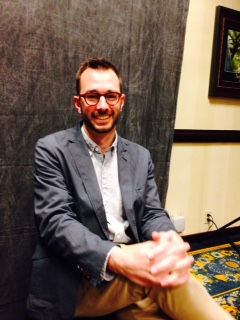
Today Carol interviews John Sutter, journalist from CNN on his report on the prevalence of rape in Alaska. He talks about his journey to see why Alaska has the highest incidence of rape in the nation.
You can listen to the show here
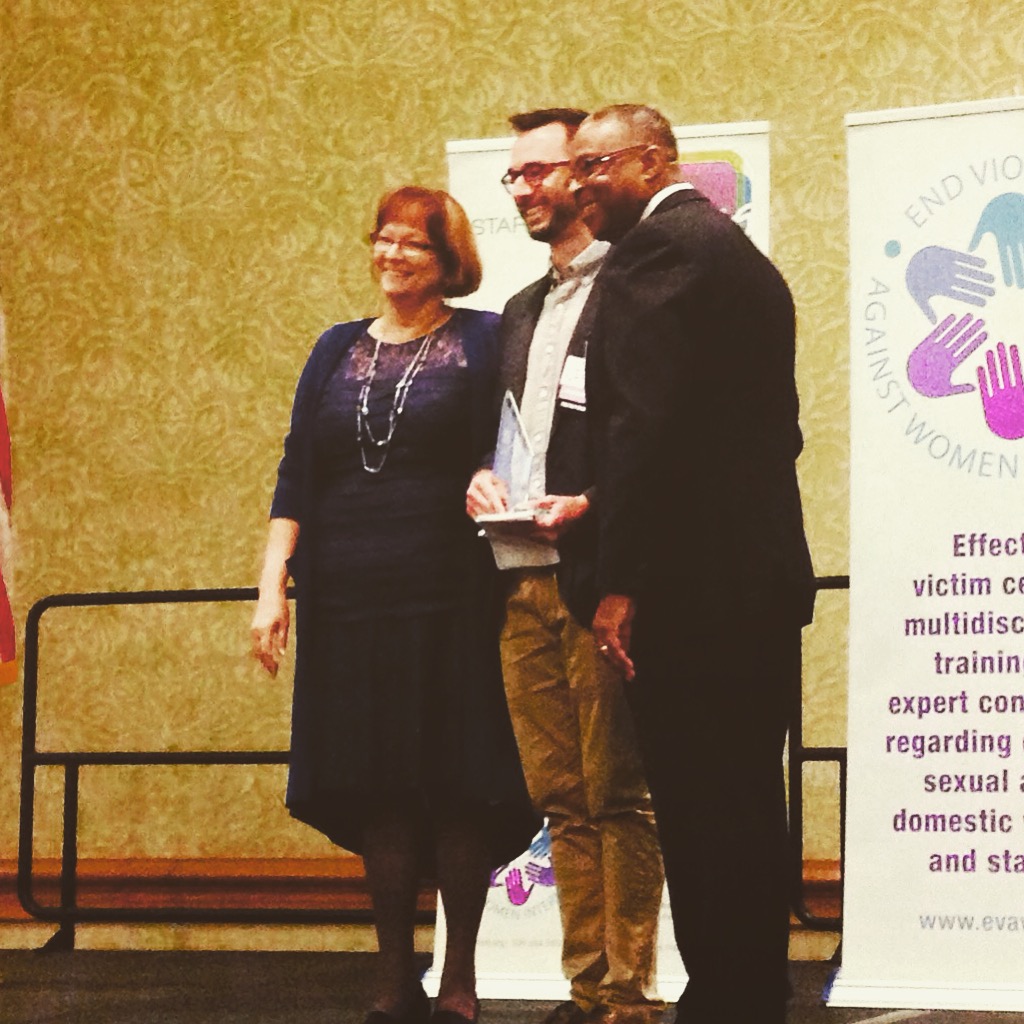
Links:
John Sutter at CNN
WRIR 97.3 FM Richmond Independent Radio

Shekeyah Hayes, student from Virginia Union University, talks about the prevalence and impact of domestic violence on campus.
Virginia Family Violence & Sexual Assault Hotline 1-800-838-8238

Today Carol talks about vimeo made and distributed by Cambridge Rape Crisis Center: Know Your Limits. Help change the conversation from telling women how to avoid being raped to instead telling potential rapists how to avoid raping others.
Listen to the episode here
Links:
Virginia Family Violence & Sexual Assault Hotline 1-800-838-8238
Carol talks about new legislation passed in Virginia designed to provide enhanced protections and access to services for survivors of sexual assault on campus.
Listen to the show here
Resources:
 Carol Olson
 Jenn
Jenn The V Word