Search

The V Word

Advocating to end sexual and domestic violence

Good news for military: the National Defense Authorization Act is signed

Here is some positive news for advocates against sexual and domestic violence. This week, after much anticipation, President Obama signed the 2013 National Defense Authorization Act (NDAA) into law. This includes 19 amendments to significantly reform Department of Defense sexual assault and sexual harassment policies.

This bill is significant in that it has the largest number of sexual violence provisions ever signed into law. The Service Women’s Action Network (SWAN) have worked tirelessly for two years to advocate for these changes. While the NDAA is a bill that focuses on the budget and expenditures of the Department of Defense (DOD), It also deals with multiple military issues. It is the mechanism used by Congress to provide oversight and mandate change within the military.

Again, SWAN’s advocacy work is key as they provide bipartisan legislative recommendations to both the House and Senate to improve the welfare of service women and women veterans. Kudos to SWAN and their advocacy to introduce more provisions based to improve the way the military handles sexual assault and sexual harassment in the ranks. Specifically, the law now provides for:

  • Prohibiting the military from recruiting anyone convicted of a sex offense
  • Mandatory separation of convicted sex offenders
  • Insurance coverage for abortions in cases of rape or incest for service women and military family members
  • Retention of restricted report documentation for 50 years if so desired by the victim
  • The creation of “Special Victims Units” to improve investigation, prosecution and victim support in connection with child abuse, domestic violence and sexual assault cases
  • Allowing victims to return to active duty after separation to help prosecute sex offenders
  • The creation of an independent review panel comprised of civilian and military members that will closely examine the way that the DOD investigates, prosecutes, and adjudicates sexual assaults
  • Required sexual assault prevention training in pre-command and command courses for officers
  • Improved data collection and reporting by the military on sexual assault and sexual harassment cases
  • Annual command climate assessment surveys to track individual attitudes toward sexual assault and sexual harassment
  • A review of unrestricted sexual assault reports and the nature of any subsequent separations of victims who made those reports
  • Notification to service members of the options available for the correction of military records due to any retaliatory personnel action after making a report of sexual assault or sexual harassment
  • Requirement for DOD to establish a policy for comprehensive sexual harassment prevention and response
  • Language that will allow better oversight and tracking of DOD’s implementation of sexual assault provisions from prior Defense Authorizations in order to ensure they are being enforced properly

SWAN’s goal is to eradicate sexual assault and sexual harassment through the transformation of military culture. The passage of the 2013 NDAA is another critical step in moving the military one step closer to change.

Please consider making a gift to help SWAN end sex discrimination and promote equality and justice in the military!

About SWAN
SWAN is a nonpartisan civil rights organization founded and led by women veterans. SWAN’s works to transform military culture by securing equal opportunity and freedom to serve without discrimination, harassment or assault; and to reform veterans’ services to ensure high quality health care and benefits for women veterans and their families.

Service Women’s Action Network | 220 E. 23rd Street | Suite 509 | New York | NY | 10010

Some articles posted by SWAN

Read the New York Times story on the relationship between Maxim magazine and the military.
Click here to read The Daily Beast’s coverage of the passage of the Shaheen Amendment.

Watch this Al-Jazeera clip on the VA Military Sexual Assault Claims process here.

Check out this Federal News Radio piece here on the rise in reported sexual assaults at military service academies.

January is National Slavery and Human Trafficking Prevention Month

THERE ARE MORE THAN 30 MILLION SLAVES IN THE WORLD TODAY, MORE THAN AT ANY OTHER POINT IN HUMAN HISTORY.

President Barack Obama has proclaimed January “National Slavery and Human Trafficking Prevention Month”

“This month, we rededicate ourselves to stopping one of the greatest human rights abuses of our time. Around the world, millions of men, women, and children are bought, sold, beaten, and abused, locked in compelled service and hidden in darkness. They toil in factories and fields; in brothels and sweatshops; at sea, abroad, and at home. They are the victims of human trafficking — a crime that amounts to modern-day slavery.

A press statement put out by NAAG President and Washington Attorney General Rob McKenna states:

“‪Human trafficking is a $32 billion global industry, the fastest growing and second largest criminal activity in the world, tied with arms and after drug dealing. I applaud President Obama’s effort to bring this issue to the forefront in the minds of Americans by proclaiming January as National Slavery and Human Trafficking Prevention Month.”

The Polaris Project defines Human Trafficking as:

“Human trafficking is a form of modern-day slavery where people profit from the control and exploitation of others. As defined under U.S. federal law, victims of human trafficking include children involved in the sex trade, adults age 18 or over who are coerced or deceived into commercial sex acts, and anyone forced into different forms of “labor or services,” such as domestic workers held in a home, or farm-workers forced to labor against their will. The factors that each of these situations have in common are elements of force, fraud, or coercion that are used to control people.  Then, that control is tied to inducing someone into commercial sex acts, or labor or services.  Numerous people in the field have summed up the concept of human trafficking as “compelled service.”  Every year, human traffickers generate billions of dollars in profits by victimizing millions of people around the world, and here in the United States.  Human trafficking is considered to be one of the fastest growing criminal industries in the world. Click here to access human trafficking resource packs.”

they further define Sex Trafficking as:

“Sex trafficking occurs when people are forced or coerced into the commercial sex trade against their will.  Child sex trafficking includes any child involved in commercial sex.  Sex traffickers frequently target vulnerable people with histories of abuse and then use violence, threats, lies, false promises, debt bondage, or other forms of control and manipulation to keep victims involved in the sex industry.  Sex trafficking exists within the broader commercial sex trade, often at much larger rates than most people realize or understand.  Sex trafficking has been found in a wide variety of venues of the overall sex industry, including residential brothelshostess clubs, online escort servicesfake massage businessesstrip clubs, and street prostitution. For sex trafficking resource packs, click here.”

Not For Sale hosts information and provides programs to help communities vulnerable to exploitation.  They have a Slavery Map depicting incidents of trafficking.  Post your story.

The Violence Against Women Act Dies…. Did one person kill it?

Apparently The Violence Against Women Act died last night.  How could this happen?  How does a country founded on freedom and equal rights continue to deny that very thing to certain people?  How can House Majority Leader Eric Cantor have supported such a bill while he was seemingly working to support other non-partisan efforts.

For those just tuning in, one of the items up for consideration at the conclusion of the 112th Congress was the Senate bill reauthorizing the Violence Against Women Act, otherwise known as VAWA.  This act was originally passed in 1994.  This time when it came up for renewal, the Senate version had newly added tribal protections for American Indian women, granting tribes limited authority to prosecute sexual-assault crimes on their lands–whether the crimes are committed by American Indians or not.  Eric Cantor campaigned against this version of the bill.  Instead, Cantor offered up a version which excluded the new American Indian protections, along with those for undocumented immigrants as well as lesbian and trans women, which the House passed.

Eric Cantor did not offer up any reasons for his actions to deny every woman in America the same legal protections against violent perpetrators.   When MSNBC reported this story, they listed the following quotes:

  •  In December on Melissa Harris-Perry, National Organization for Women President Terry O’Neill said the fight was “draining the resources of the advocacy groups that have been working on re-authorization for two solid years. Many of the advocacy groups also provide services; their resources are being drained. I don’t think that’s a mistake.”
  • The chief Democratic advocate for the VAWA reauthorization, Sen. Patty Murray of Washington, released a statement that was reported in Jezebel:  “The House Republican leadership’s failure to take up and pass the Senate’s bipartisan and inclusive VAWA bill is inexcusable. This is a bill that passed with 68 votes in the Senate and that extends the bill’s protections to 30 million more women. But this seems to be how House Republican leadership operates. No matter how broad the bipartisan support, no matter who gets hurt in the process, the politics of the right wing of their party always comes first.”

Can a representative for the people, and the GOP,  really be so indifferent to the rights of women?  Is what O’Neill suggested, a desire and plan to exhaust advocacy groups and their resource, really true?  Why be determined to so actively block equal protections for only certain groups of women: Native American, Undocumented Immigrants, and those who identify as Lesbian and Transgender?   Don’t you want to demand an explanation?

Feel free to contact his office and ask. http://cantor.house.gov/contact

Stalking: Know It, Name It, Stop It

January is National Stalking Awareness Month, a time to focus on a crime that affects 6.6 million victims a year.

While legal definitions of stalking vary from one jurisdiction to another, a good working definition of stalking is a course of conduct directed at a specific person that would cause a reasonable person to feel fear.

STALKING VICTIMIZATION

• 6.6 million people are stalked in one year in the United States.
• 1 in 6 women and 1 in 19 men have experienced stalking victimization at some point during their lifetime in which they felt very fearful or believed that they or someone close to them would be harmed or killed. Using a less conservative definition of stalking, which considers any amount of fear (i.e., a little fearful, somewhat fearful, or very fearful), 1 in 4 women and 1 in 13 men reported being a victim of stalking in their lifetime.
• The majority of stalking victims are stalked by someone they know. 66% of female victims and 41% of male victims of stalking are stalked by a current or former intimate partner.
• More than half of female victims and more than 1/3 of male victims of stalking indicated that they were stalked before the age of 25.
• About 1 in 5 female victims and 1 in 14 male victims experienced stalking between the ages of 11 and 17. [Michele C. Black et al., “The National Intimate Partner and Sexual Violence Survey: 2010 Summary Report,” (Atlanta, GA: National Center for Injury Prevention and Control, Centers for Disease Control and Prevention, 2011).]
• 46% of stalking victims experience at least one unwanted contact per week.
• 11% of stalking victims have been stalked for 5 years or more. [Katrina Baum et al., “Stalking Victimization in the United States,” (Washington, DC: Bureau of Justice Statistics, 2009).]

STALKING AND INTIMATE PARTNER FEMICIDE

• 76% of intimate partner femicide victims have been stalked by their intimate partner.
• 67% had been physically abused by their intimate partner.
• 89% of femicide victims who had been physically assaulted had also been stalked in the 12 months before their murder.
• 79% of abused femicide victims reported being stalked during the same period that they were abused.
• 54% of femicide victims reported stalking to police before they were killed by their stalkers.
[Judith McFarlane et al., “Stalking and Intimate Partner Femicide,” Homicide Studies 3, no. 4 (1999).]

RECON STUDY OF STALKERS

• 2/3 of stalkers pursue their victims at least once per week, many daily, using more than one method.
• 78% of stalkers use more than one means of approach.
• Weapons are used to harm or threaten victims in 1 out of 5 cases.
• Almost 1/3 of stalkers have stalked before.
• Intimate partner stalkers frequently approach their targets, and their behaviors escalate quickly. [Kris Mohandie et al.,“The RECON Typology of Stalking: Reliability and Validity Based upon a Large Sample of North American Stalkers,” Journal of Forensic Sciences, 51, no. 1 (2006).]

IMPACT OF STALKING ON VICTIMS

• 46% of stalking victims fear not knowing what will happen next.
• 29% of stalking victims fear the stalking will never stop.
• 1 in 8 employed stalking victims lose time from work as a result of their victimization and more than half lose 5 days of work or more.
• 1 in 7 stalking victims move as a result of their victimization. [Baum et al.]
• The prevalence of anxiety, insomnia, social dysfunction, and severe depression is much higher among stalking victims than the general population, especially if the stalking involves being followed or having one’s property destroyed. [Eric Blauuw et al., “The Toll of Stalking,” Journal of Interpersonal Violence, 17, no. 1 (2002):50-63.]

STALKING LAWS

• Stalking is a crime under the laws of 50 states, the District of Columbia, the U.S. Territories, and the Federal government.
• Less than 1/3 of states classify stalking as a felony upon first offense.
• More than 1/2 of states classify stalking as a felony upon second or subsequent offense or when the crime involves aggravating factors.
• Aggravating factors may include: possession of a deadly weapon, violation of a court order or condition of probation/parole, victim under 16 years, or same victim as prior occasions.
For a compilation of state, tribal, and federal laws visit www.victimsofcrime.org/src.

__________________________________________________________________________________________________________________________________

The mission of the Stalking Resource Center is to enhance the ability of professionals, organizations, and systems to effectively respond to stalking. The Stalking Resource Center envisions a future in which the criminal justice system and its many allied community partners will effectively collaborate and respond to stalking, improve victim safety and well-being, and hold offenders accountable. Visit us online at www.victimsofcrime.org/src. Contact us at 202-467-8700 or src@ncvc.org.
This document was developed under grant number 2008-TA-AX-K017 from the Office on Violence Against Women (OVW) of the U.S. Department of Justice. The opinions and views expressed in this document are those of the author(s) and do not necessarily represent the official position of the Office on Violence Against Women of the U.S. Department of Justice. For more information on the U.S. Department of Justice Office on Violence Against Women visit http://www.ovw.usdoj.gov

This document may be reproduced only in its entirety. Any alterations must be approved by the Stalking Resource Center

Coping with Holiday Stress

Holiday’s can be a particularly tough time for survivors of interpersonal violence and abuse.  Many things about holidays and more time with families can be stressful.  Reunions can be reminders of life before the assault.  It can also be a time that survivors have to be around family members that abuse.   It can be difficult for a survivor  to express feelings and talk about their lives if family members aren’t aware of the assault.

According to Dr. Glenn Schiraldi the following six steps can return a survivors’ relationships to being their safety net.

  1. Number one is to accept one’s fears.  This could mean a survivor no longer denying fears about their family members finding out about the assault; not necessarily telling them, but acknowledging the fear of their knowing.
  2. The next step is to replace those ideas that block close relationships.  This could be the thoughts such as “they don’t know the real ‘me’ anymore.”  Survivors should actively reassure themselves that their families love them regardless and know who they really are, even if family doesn’t know everything the survivor has been through.
  3. The third step is to retrain oneself on communication skills if they have been damaged; this could mean standing up for one’s self or expressing affection.
  4. The fourth step is to gradually practice trusting others again.  An example for this would be to allow a person into your world for a bit; maybe share something personal and a point of pride with a close or favorite relative.
  5. Next; step back and notice how family and friends handle conflicts and stress.
  6. Lastly, consider picking up where things were left before the trauma.  Take this moment to ponder how the relationships truly were before and where they could be.  Survivors can envision how their close, intimate relationships should look like and begin working towards that goal.

Holidays bring enough stress, but compounding it with the stress that trauma can bring may seem overwhelming.  However, they can also be a wonderful opportunity to show us again who matters in life and a strong sense of new opportunities in the new year.


My upcoming show: The Anti-Violence Advocate

My upcoming show: The Anti-Violence Advocate, is going to be focused on violence and it’s impact on the individual, relationships, families, and our communities.   Violence has great consequences across communities and is integrally linked to oppression of women and marginalized populations, the perpetuation of sexism, racism, heteronormativity, transphobia and other ideologies of domination.


Violence is defined by the World Health Organization as intentional use of physical force or power, threatened or actual, against a person or against a group or community that either results in or would have a high likelihood to result in injury, death, psychological harm, maldevelopment or deprivation.


 Violence and injuries kill more people aged 1 – 44 than any other cause and results in over 400 billion in medical care annually.  The Center for Disease Control and Prevention consider this to be one the most serious health problems in the United States.  Yet the numbers of violent deaths is only a portion of the story.  Interpersonal violence in the form of child abuse, sexual assault, stalking, domestic violence, dating violence, and human trafficking for sexual exploitation effects 1 in 4 or more of women and 1 in 8 or more of males.  Survivors are left with permanent physical and emotional scars that can change lives forever by impacting mental health, impairing social functioning and slowing economic and social development, and require ongoing intervention.  But here again, the impact on the survivor is only part of the story.  Violence erodes our communities by increasing costs and demands on medical care, reducing productivity, decreasing property values, and disrupting social services.  The range of interpersonal violence I described contributes to truancy, unemployment, unplanned pregnancies, communicable diseases, unhealthy relationships, substance abuse and dependency, and reduction or loss of income. 


Violence is perpetuated against more than 25% of our community individually and impacts a 100% of our community.  If violence was a disease, it would be considered an epidemic.  Social forces would mobilize, funders would come out in droves, and programs would be implemented to effect change immediately.  But for violence, that still is not happening consistently or maintained strategically.  And why is that?  As violence is an intentional act, it then bodes the realization that it is preventable.  While some people with mental health disorders may cause violence without understanding what they are doing, most violence is premeditated and planned.  People intentionally make decisions to perpetuate violence against others, with the highest numbers of violence perpetuated against women and members of marginalized communities. 


Interpersonal and social factors are related to both the cause and the prevention of violence.  The potentially modifiable factors most associated with levels of violence are concentrated poverty, income disparity, the absence of stable and healthy relationships within families, and (what might be most controversial for some) gender inequality. 

A strategic approach addressing the underlying causes of violence is most effective in preventing violence.  Evidenced-based or scientifically credible strategies to prevent violence include nurse home-visiting and parenting education to prevent child maltreatment; life skills training for children ages 6–18 years; school-based programmes to address gender norms and attitudes; reducing alcohol availability and misuse; reducing access to guns and knives; and promoting gender and racial equality by, for instance, supporting the economic empowerment of women and traditionally marginalized ethnic and cultural groups. 

On-Air for WRIR and Blogging for the Pixel Project

I am excited to begin a couple new projects in my anti-violence work.

On December 9th, my first blog on Rape in War – a small article and a list of 16 resources that range from international organizations, documentaries, books, and news articles will appear on The Pixel Project Website – 16 for 16 Days of Activism.  I am proud to be part of the 16 for 16 Days of Activism to end violence against women.  I have spent the last 6 years focused on running a local rape crisis center and centered on response and direct education for a small regional community.  It was a great opportunity and learning element to turn my focus on sexual assault in the context of war and conflict.  When looking at rape in communities, families, and organizations; you become focused on the known predator of interpersonal crime and address the issue of sexual assault with a single survivor and family.  Sexual assault as a war crime brings home the link to larger issues of sexual assault as a part of society’s response to conflict.  The numbers of victims becomes a global number and is staggering, the extended families as secondary survivors is even more staggering when looked at as a group.  My research for this simple blog brought home the enormous amount of crime that accompanies war and conflict.  Crime that is overlooked or ignored.  The impact of trauma on the survivors, the families, and the community that will carry on is equally enormous and with the reduction of resources that happens in war, will be even more difficult to address and treat.   The impact of these crimes will continue even when peace is obtained.

My other project is going to be a weekly short spot on my local radio station WRIR  (Richmond Independent Radio).  I begin taping this weekend with the spots to be starting after the New Year.  I so look forward to sharing information on the social impact of interpersonal violence (sexual assault, stalking, domestic violence, dating violence, trafficking) that are at epidemic levels in our communities.  More to come!


Call for submissions for the Sexual Assault Report (SAR)

A repost from End Violence Against Women International:

We are extremely pleased to announce that Joanne Archambault and Kim Lonsway are now serving as Editors of the Sexual Assault Report (SAR), an excellent bimonthly newsletter published by the Civic Research Institute.

We would therefore like to invite professionals in the field to submit manuscripts to be considered for publication in the Sexual Assault Report (SAR). SAR publishes high quality articles and reviews of books, social science articles, and legal decisions related to sexual assault. The kinds of topics that might be interesting for SAR readers include a review of a book, DVD/video, report, or social scientific article in the field. Or, professionals could write an original article on topics such as the following:

Dynamics of sexual assault crimes, including new tactics and vulnerabilities
Impact of sexual assault on children, teens, and/or adults
Communities at particularly high risk of sexual victimization (e.g., people with disabilities, Native American women, adolescents, women serving in the U.S. military)
Victim recovery and advances in therapeutic assistance
New legislative developments & implications for practice
Strategies for increasing accessibility of programs for people with disabilities and others
Program development/sustainability for SART teams
Advocacy by systems- and community-based professionals
Effective strategies for law enforcement investigation and criminal prosecution
Current issues regarding forensic medical examinations
Approaches to effectively working with the media
Particularly interesting for SAR readers are articles that bridge the gap between research and practice, to provide concrete guidance for practitioners based on empirically supported knowledge. The publication is designed to be useful for practitioners in a wide range of disciplines, including:

Victim advocates and service providers
Prosecutors and civil attorneys
Law enforcement professionals
Medical forensic examiners
Researchers and educators
Policymakers and media representatives
For more information on SAR and the Civic Research Institute please see their website at: http://www.civicresearchinstitute.com/sar.html.

Because SAR is a bi-monthly publication, articles will be accepted in an ongoing way. Article length varies, typically between 500 and 5,000 words, and the format includes only the most sparing use of footnotes, tables, and no graphs or photographs. If you have any questions about format, please see the style guidelines and language policy for SAR. A sample issue of SAR is also available for you to review.

Please feel free to contact one of us to discuss any possible ideas you have for articles. We can be reached by telephone at 509-684-9800, by fax at 509-684-9801, or via email at Kim@evawintl.org or Joanne@evawintl.org. We look forward to hearing from you and reading your submissions!

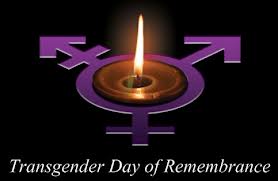
Transgender Day of Remembrance

This month holds the Transgender Day of Remembrance. On this day show support for those among us who are targeted for violence due to their differences from the masses. Transgender individuals are one of the most vulnerable groups to interpersonal violence. Transgender individuals also have many barriers to accessing services for recourse when victimized. Transgender individuals are at a high risk of being assaulted and killed.

On Tuesday, November 20th is Transgender Day of Remembrance to share grief over loss of friends, partners and family members who have been lost due to violence against them. The Day of Remembrance is also a day to make a commitment to pursue equality for all, display awareness and inclusiveness in your everyday life and to be a model of non-violence.

Check out your area for events. For those in the Richmond, Virginia area, below are some upcoming events:

Monday, November 12 at 6 pm – Alliance for Progressive Values Salon with Dr. Lisa Griffin, Speaker. Helen’s Restaurant, 2527 W. Main Street. (corner of Main and Robinson)

Sunday, November 18 at 7 pm – Queer Action – VCU Candlelight Vigil held at the VCU Amphitheater

Tuesday, November 20 at Noon – Transgender Day of Remembrance Flash Mob, Queer Action – VCU held at The Compass, VCU Campus

Tuesday, November 20 at Noon – Equality in the Workplace Panel, Brown Bag Lunch by University of Richmond Common Ground held at the Downtown Campus, 626 E. Broad Street, Suite 100

Tuesday, NOvember 20 at 7 pm – Transgender Day of Remembrance – Candlelight Memorial with reception to follow held at the First Unitarian Universalist Church of Richmond, 1000 Blanton Avenue.

For Richmond events check out their social network sites:

Facebook

Twitter: @RVATDOR

Create a free website or blog at WordPress.com.

Up ↑