Search

The V Word

Advocating to end sexual and domestic violence

Tag

sexual assault

Unique prevention programs in middle schools

Carol talks about successful prevention programs in two schools systems.

You can listen to the show here

Need to find a local sexual assault or rape crisis center near your school?  Look at the Virginia Sexual and Domestic Violence Action Alliance List of Member Agencies to find local centers.

Title IX on College Campuses – Part II

Today we talk with Ted Lewis, Associate Director LGBTQ Campus Life at the University of Richmond, about Title IX on college campuses, what this means for campuses in protecting students that have experienced sexual harassment and/or sexual violence, as well as it’s implications on LGBTQ students.


This is Part 2 of a 4 part series so please stay tuned! We will be posting the discussion in it’s entirety soon for those that want to listen to it all the way through


Listen to Part 2 Here


Do you need help or information?  Here are some options…


You can call  the Virginia Family Violence and Sexual Assault Hotline at 1-800-838-8238. They can connect you with local agencies, services, as well as university services.

If you have been assaulted and feel comfortable with calling the police, call 911.

You can now text/chat The Virginia Hotline Monday through Friday 4pm-8pm at http://www.vsdvalliance.org/

Text: (804) 793-9999 Monday-Friday 4pm-8pm to speak to someone today!

If you have been assaulted in the last 72 hours you can get a  forensic exam to collect evidence and receive medical care. You can do this with and without reporting to the police as well.

Want to share a story or ask a question?  Email me at thevword.radio@gmail.com or tweet me at my twitter account:  @preventviolence.  You can read the transcript for this show and past shows on my blog at www.thevword.org

Today’s host was Carol Olson. The V Word is recorded in the studios of WRIR-LP 97.3 and streamed at wrir.org, The V Word is co-produced by Carol Olson and Jenn Gallienne. Music was created by The Etching Tin

The V Word Interview – Trace Fleming

traceflemingadvocatesToday we interview Trace G. Fleming, activist and advocate working to end violence against women. She is the creator of both the Advocate News and Self-Care for Advocates, platforms on Facebook to serve advocates. Today she talks about her work starting a Feminist organization, WISE; her work as the Coordinator of the Abuse in Later Life Project and hosting Self-Care for Advocates to be able to provide therapeutic care for advocates suffering from vicarious trauma and burnout.

You can listen to the interview here

The V Word broadcast: RHART with Fatima Smith

Fatima Smith of RHART

Today Fatima Smith stopped by to give an update on the RHART program, a collaborative hospital accompaniment program comprised of local centers around the metro Richmond area.

You can listen to the show here

Through RHART, trained volunteers respond to area hospital emergency rooms to provide advocacy and support to individuals who have experienced sexual and domestic violence. RHART is a regional collaborative between Safe Harbor, Hanover Safe Place, and the YWCA of Richmond.  Volunteers respond to hospital accompaniment requests 24/7 and connect survivors with community resources and follow-up services. We provide services to anyone who has experienced intimate partner/domestic violence regardless of race, gender, age, national origin, gender identity or expression, faith, sexual orientation, disability, ethnicity and geographic location. Our services are available in both English and Spanish, and all services are offered free of charge to anyone seeking help.  – Safe Harbor

The V Word: An Interview with the YWCA of Richmond

Today’s show is an hour long special. Becky Lee and Carol Ann Lajoie of the YWCA of Richmond talk about upcoming campaigns, the state of funding in Virginia and their new regional collaborative hotline.

You can listen to the episode here

Resources:

YWCA of Richmond

Show is broadcast on WRIR 97.3 FM and streamed at wrir.org

The V Word: Prescriptions and Rape on Campus – A Survivor’s Story

Here is today’s broadcast of The V Word.

You can listen to today’s episode here

A survivor’s story came in yesterday. She writes:
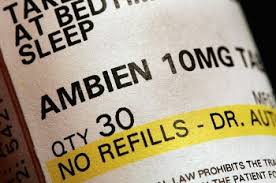
pillbottle“I have a hard time sleeping in college, I guess it’s the noise, sharing a room, and the late nights. I had started taking a sleep aid to help me sleep. My friends, of course, knew this as I did not keep it a secret. In fact I would often take it in front of them as I was winding down for the night and before everyone left my room on study or movie nights. It took a few minutes to work and I would take it as people were leaving and I started getting ready for bed. I never felt I was not safe before.
One night though I wasn’t safe. A male friend who had been over watching a movie, stayed behind the others and came back in to my room after the sleeping pill was taking effect and raped me.
I went to the school but it went no where. He stated I asked him to, the school stated it was my word against his and I had let him over to be in my room in the first place. It was implied I led him on by taking the pills.
I had to see him on campus, I had to change my classes because he was in two of them. I finally dropped out and returned home because I got too depressed to study and my grades started dropping.”

She is not alone and as listeners are aware, rape on college campuses is finally a national topic of conversation.
Findings from a report by Fisher, B.S., Cullen, F.T., & Turner, M.G. (2000). The Sexual Victimization of College Women. National Institute of Justice, Bureau of Justice Statistics. include:

  • It is estimated that the percentage of completed or attempted rape victimization among women in higher educational institutions may be between 20% and 25% over the course of a college career.
  • Among college women, 9 in 10 victims of rape and sexual assault knew their offender.
    Almost 12.8% of completed rapes, 35% of attempted rapes, and 22.9% of threatened rapes happened during a date.
  • 2.8% experienced either a completed rape (1.7%) or an attempted rape (1.1%) during the six-month period in which the study was conducted. Of victims, 22.8% were victims of multiple rapes.
  • If this data is calculated for a calendar year period, nearly 5% of college women are victimized during any given calendar year.
  • It is estimated that for every 1,000 women attending a college or university, there are 35 incidents of rape each academic year.
  • Off-campus sexual victimization is much more common among college women than on-campus victimization. Of victims of completed rape 33.7% were victimized on campus and 66.3% off campus.
  • Less than 5% of completed or attempted rapes against college women were reported to law enforcement.
  • However, in 2/3rds of the incidents the victim did tell another person, usually a friend, not family or school officials.
  • Another study by Krebs, C.P., Lindquist, C.H., Warner, T.D., Fisher, B.S., & Martin, S.L. (2007). The Campus Sexual Assault (CSA) Study. National Institute of Justice found:

    Many women (88%) have never consumed a drink left unattended or consumed a drink given to them by a stranger (76%).

  • One-quarter of the sample (25%) reported consuming alcohol or drugs before sex at least once a month, and slightly fewer (23%) were drunk or high during sex at least once a month.
  • Eighteen percent experienced an attempted (13%) and/or completed (13%) sexual assault since entering college.
  • Among the total sample, 5% experienced a completed physically forced sexual assault, but a much higher percentage (11%) experienced a completed incapacitated sexual assault.
  • Sexual assaults were most likely to occur in September, October and November, on Friday or Saturday nights, and between the hours of midnight and 6:00 a.m.
    Most victims of physically forced or incapacitated sexual assault were assaulted by someone they knew (79% and 88%).
  • Freshmen and sophomores are at greater risk for victimization than juniors and seniors.

For Student Activists –

  • Know Your IX
  • Students Against for Ending Rape (SAFER). CHANGE HAPPENS anti-violence campus organizing manual. Free for students.
  • Watch PreventConnect Podcast with SAFER, Beyond Blue Lights.
  • The Center for Public Integrity. Reporter’s Toolkit: Investigating Sexual Assault Cases on Your Campus.

For Law Enforcement

  • U.S. Department of Justice Community Oriented Policing Services.Problem-Oriented Guides for Police Series No. 17: Acquaintance Rape of College Students.

General Campus Resources

  • The Center for Public Integrity. Sexual Assault on Campus: A Frustrating Search for Justice (three-part series).
  • Los Angeles College Consortium Project (LACCP). Dealing with Campus Violence Against Women Website.
  • Office on Victims of Crime Message Board: Responding to Sexual Violence on Campus.
    Sexual Assault Program Coordinators (SAPC) listserv
  • To join: https://list.mail.virginia.edu/mailman/listinfo/sapc
    Students Active for Ending Rape (SAFER) Change Happens blog
  • California Coalition Against Sexual Assault Campus Program
    (CALCASA is the technical assistance provider for grantees of the Office on Violence Against Women’s Grants to Reduce Domestic Violence, Dating Violence, Sexual Assault, and Stalking on Campus Program)
  • Campus Sexual Assault Response Teams: Program Development and Operational Management (Book)

Do you need help or information? Here are some options…

If you have been assaulted, call 911.

The Richmond area has a new regional hotline specific to the needs of sexual and domestic violence survivors: 804-612-6126

The Richmond Behavioral Health Authority has a hotline to help people who are having suicidal thoughts at 819-4100.

To get a forensic exam to collect evidence and receive medical care, the local hospitals in the Richmond area with Forensic Nurse Examiners are at Medical College of Virginia and St. Mary’s Hospital.

For help with counseling and advocacy, local rape crisis centers, child advocacy centers and domestic violence shelters can provide services. To find a center closest to you… you can call the Virginia Family Violence and Sexual Assault Hotline at 1-800-838-8238. That is the Virginia Family Violence and Sexual Assault Hotline at 1-800-838-8238.

Are you a family member or a bystander and want know how you can help?

  • For information on how to report an assault in the Richmond, Virginia, USA are, you can call the non-emergency line at 804-646-5100 or go by a local police station office. The main Richmond office is located at 200 East Grace Street.
  • Get involved with your local domestic violence shelter to join a group or service that is available.
  • Donate to funds services that help women recovery and restart their lives.

Want to share a story or ask a question? Email me at thevword.radio@gmail.com or tweet me at my twitter account: @preventviolence. You can read the transcript for this show and past shows on my blog at www.thevword.org
The V Word is recorded in the studios of WRIR-LP 97.3 and streamed at wrir.org, read and produced by Carol Olson. Production support is provided by Jennifer Gallienne and Bryan Connolly. Music was created by The Etching Tin

The V Word – Roofies (podcast aired on WRIR 97.3)

Welcome to today’s edition of The V Word.

You can listen to the episode here 

September is National Recovery Month and this month I am going to focus on the use of alcohol or other drugs to facilitate sexual assault.
I am sure most of you have heard about the students at North Carolina State University who are inventing a nail polish that changes color when it comes into contact with, what are commonly called, date rape drugs.
The term “date-rape drugs” is used to identify Rohypnol, Xanax, and GHB. Do you know what these are exactly?
Rohypnol is the brand name for a drug in the same family as Valium and Xanax. It is a fast-acting sedative. However, it has a side effect that produces memory loss while using the drug.
GHB is gamma-hydroxybutyrate and also produces memory loss while under it’s influence.
Both these drugs dissolve easily, are colorless and oderless. These drugs are used to sedate a person who may not be able to recall what happened under the influence.
Alone, GHB can produce intense drowsiness, confusion, nausea, dizziness, disorientation, vomiting, seizures, respiratory depression, and reduced or loss of consciousness in as little as 10-20 minutes after ingestion. However, when mixed with alcohol, GHB can be extremely lethal. Coma and death are fairly common in overdoses. The effects of GHB can last up to 3-6 hours. GHB is dangerous for several reasons including the ones listed above. One of the main dangers is that it takes so little of it to produce a big effect. Just 2 grams can induce a coma-like sleep where intubation is the only means to wake the user.
What are the street names for GHB: Grievous Bodily Harm, Liquid X, Liquid E, Liquid Ecstasy, Easy Lay, G, Vita G, Georgia Home Boy, G-Juice, Great Hormones, Somatomax, Bedtime Scoop, Soap, Gook, Gamma 10, Energy Drink, Salt Water, Liquid Dust, Cherry Meth, Fantasy, Organic Quaalude, and Sleep 500.
Rohypnol can produce drowsiness, confusion, motor skill impairment, dizziness, disorientation, impaired judgment, and reduced or loss of consciousness in as little as 20-30 minutes after ingestion. However, when mixed with alcohol, Rohypnol can be even more dangerous. There may be extremely low blood pressure, respiratory depression, coma, or death. Since Rohypnol is a sedative like alcohol, the two together can be lethal.
Since it is illegal in the US, it is often smuggled into the country from Mexico, Canada, and Europe. It is primarily sent through the US Postal Service, commercial delivery services, and smuggled by individuals. It is classed as a Schedule III federally controlled substance although 8 states have reclassified it as a Schedule I controlled substance.
What are some of Rohypnol’s street names? Ruffies, Roofies, Rophies, Roches, Roaches, La Rochas, Rope, Rib, Forget Pill, Pingus, R2, Reynolds, Row-shay, Roach 2, Wolfies, Trip-and-Fall, Poor Man’s Quaalude, Whiteys, Mind Erasers, Mexican Valium, Lunch Money, Circles, and Roopies.
Notice the street names? Notice how they actually identify what the drugs are used for?
How do you know if you may have been drugged and then assaulted? Many victims report waking up and not knowing how they got home, finding their clothing on inside out or incorrectly or missing items, not remembering the end of a party or event. They may feel have wounds or injuries they cannot account for.
These drugs can show up on a drug test following a sexual assault but only in the person goes to a hospital and requests a test within 24 hours.
What can you do if you think you have been drugged?
get to a safe place and call someone you trust.
get to a hospital emergency room immediately. – Remember mixed with alcohol these drugs can be fatal or induce coma.
notifiy law enforcement.
call a rape crisis center
If you decide to file a report – do not shower, bathe, douche, change clothes, or brush your teeth until medical and legal evidence can be collected. Get to a hospital or clinic to receive treatment for any internal/external injuries (whether or not you see any – they may be undetectable to you), testing for pregnancy or STD’s, treatment for pregnancy or STD’s, and to receive support. Request a urine test to detect the presence of drugs as soon as possible.

A new invention developed by students at North Carolina State University has been highlighted in the press and social media this week: a nail polish, called “Undercover Colors,” that changes color when it comes into contact with date-rape drugs. You just have to stir your drink with your finger and if the nail polish changes color, it signals a problem.
The marketing behind the new product is “The First Fashion Company Empowering Women To Prevent Sexual Assault.”
While there is debate of whether this is just another means for women to have to prevent sexual assault on themselves, it does provide an intervention tool. Until society catches up that preventing sexual assault is not the responsibility of women or the victim, we continue to need tools like these that can help identify if you are being drugged. That is of course if you wear nail polish.

How can you help?
Get involved with your local rape crisis center and addictive recovery center to join a group or service that is available or help create one.
For help or information? Here are some options…
If you have been assaulted, call 911. Local rape crisis centers have advocates they can send to help support you and provide information.
For information on how to report an assault in the Richmond, Virginia, USA are, you can call the non-emergency line at 804-646-5100 or go by a local police station office. The main Richmond office is located at 200 West Grace Street.
To get a forensic exam to collect evidence and receive medical care, the local hospitals in the Richmond area with Forensic Nurse Examiners are at Medical College of Virginia and St. Mary’s Hospital.
For help with counseling and advocacy, local rape crisis centers, child advocacy centers and domestic violence shelters can provide services. To find a center closest to you… you can call the Virginia Family Violence and Sexual Assault Hotline at 1-800-838-8238. That is the Virginia Family Violence and Sexual Assault Hotline at 1-800-838-8238.
Want to share a story or ask a question? Email me at thevword.radio@gmail.com or tweet me at my twitter account: @preventviolence. You can read the transcript for this show and past shows on my blog at http://www.thevword.org
The V Word is recorded in the studios of WRIR-LP 97.3 and streamed at wrir.org, read and produced by Carol Olson. Production support is provided by Jennifer Gallienne. Music was created by The Etching Tin

The V Word: Sexual Assault on College Campuses

August 25, 2014

Welcome to today’s edition of The V Word.

You can listen to the episode here: https://soundcloud.com/carol-ann-olson/08-25-2014-the-v-word-campus-sexual-assault

It is time for students to return to college campuses and there has been a lot in the news lately about sexual assault at universities and the ability of school officials to respond appropriately.
Like most survivors of interpersonal crime, I have many stories and one is from college. I broke up with someone and he came to my apartment and assaulted me. I moved into that apartment after we broke up and to my knowledge had not been there. I was wrong, he started a relationship with my roommate by providing her with drugs and talked her into nailing the windows shut in my room one day. That is the day he assaulted me. When he walked into my apartment using a key she had given him, I tried to run to my room to get out a window but they were nailed shut. My neighbors heard me screaming but did not help because they were so used to seeing him there and hearing noise, while he was visiting my roommate. I little recourse with the law because he had a key and my roommate was using drugs and the court linked that to me. Most notable in this scene is that he used my roommate. That is how premeditated it was and he made sure my neighbors were used to him.

My assault on a college campus happened many years ago. While many gains have been made since then, much is still needed. The public, including school officials do not seem to realize how offenders behave. He did this again, to another girl. He escalated his actions, hurting her physically more and adding some very sick behavior. She was a bright premed student and dropped out of school. I transferred because he would not leave me alone and continued stalking me afterward as he only got a restriction to stay 50 feet away from me. Which he did, everyday, everywhere I went.

In their article: Sexual Assault on College Campuses: A Culture of Indifference. Investigative West journalists Carol Smith and Lee van der Voo illustrate a culture of indifference and denial that results in one in five young women being sexually assaulted during their college years. (Note that other sites state that the statistics are one in four). For victims of sexual assault at colleges, Smith and van der Voo found many colleges and universities have unclear and conflicted internal disciplinary systems that not only provide no help to victims of assault but actually can compound their suffering. These fragmented system often result in victims delaying reporting and delay seeking help. Smith and van der Voo found that discipline for the alleged perpetrators was light or nonexistent. This results in students who are assaulted being left to bear the emotional, physical and financial consequences, while those they hold responsible was away.

What can you do?
PACT5 (found at pact5.org) is a national movement to prevent sexual assaults and rapes in colleges. The PACT5 project uses documentary form, produced by students, to create powerful stories. Their goal is to change potentially tragic behavior patterns. they believe that students are the ones who can make a difference in the minds of other students.

If you are sexually assaulted:

  • Get to a safe place away from your perpetrator as soon as possible.
  • Call your local rape crisis center or victim service agency if you would like to obtain an advocate. Advocates may be present during any medical, police, or legal meeting. Advocates can help you navigate the medical and criminal justice systems as well as provide information and support.
  • If you are unsure of local resources, the Rape Abuse and Incest National Network has phone and online hotlines available 24 hours a day -www.RAINN.org | 1-800-656-HOPE
  • Seek medical attention – even if no outward injuries exist, it is recommended that are examined by a medical professional. Forensic exams are done by specially trained nurses in the emergency room and are free for victims of sexual assault. (They do not have to go through the victim’s insurance.) Exams may preserve crucial evidence should you choose to report, though reporting to police is not necessary in order to have an exam completed. You can further preserve evidence by not bathing, washing your hands, eating, or smoking until the forensic exam has been completed.
  • Consider reporting to the police and/or your university.

How can you help?

Get involved with your local rape crisis center to learn more about sexual assault on college universities and get involved with your college to join a group or service that is available or help create one. Many programs for sexual assault on college campuses are located either through the student health center or the judicial services.

For help or information? Here are some options…

If you have been assaulted or your child has been assaulted, call 911. Local rape crisis centers and child advocacy centers have advocates they can send to help support you and provide information.

For information on how to report an assault in the Richmond, Virginia, USA area, you can call the non-emergency line at 804-646-5100 or go by a local police station office. The main Richmond office is located at 200 West Grace Street.

To get a forensic exam to collect evidence and receive medical care, the local hospitals in the Richmond area with Forensic Nurse Examiners are at Medical College of Virginia and St. Mary’s Hospital.

For help with counseling and advocacy, local rape crisis centers, child advocacy centers and domestic violence shelters can provide services. To find a center closest to you… you can call the Virginia Family Violence and Sexual Assault Hotline at 1-800-838-8238. That is the Virginia Family Violence and Sexual Assault Hotline at 1-800-838-8238.

Want to share a story or ask a question? Email me at thevword.radio@gmail.com or tweet me at my twitter account: @preventviolence. You can read the transcript for this show and past shows on my blog at www.thevword.org

The V Word is recorded in the studios of WRIR-LP 97.3 and streamed at wrir.org, read and produced by Carol Olson with production support by Jennifer Gallienne. Music is provided by the Etching Tin.

The V Word: Stalking and Technology

Welcome to today’s edition of The V Word.

You can listen to the episode here:

Last week I talked about predation via technology and the Internet.

A reader wrote in sharing her story about her partner stalking her using technology and asked for information.
Abusers often engage in controlling behavior to limit a person’s access to friends, family and information. Limiting the use of technology is one way of controlling a person and using technology to monitor and stalk a person is becoming more frequent the more technology is used to communicate. Abusers will monitor telephone calls and letters and engage in stalking to track their victim’s location. As technology has expanded, so do the tools to frighten, monitor, and control their victims.
Here are somethings to consider that can happen.

  • Someone can monitor your computer use without you knowing it.
  • A “history” cannot be completely erased from your computer.
  • Your cell phone use can be monitored.
  • A global positioning system (GPS) can be placed on your car, in your purse or in your cell phone to track you.
  • Did you know that e-mail is like a postcard and can be intercepted.

The New Hampshire Coalition Against Domestic and Sexual Violence has provided some great tips on Computer Safety

  • Your Internet browser keeps a record of the Web sites you have visited. It is easy to go back and see what sites the previous user has looked at. This may be of concern to you if you’d like to keep the sites you are looking at confidential. Many browser types have features that display recently visited sites.
  • If you are in danger, please try to use a safer computer that someone abusive does not have direct or remote (hacking) access to.
  • If you think your activities are being monitored, they probably are. Abusive people are often controlling and want to know your every move. You don’t need to be a computer programmer or have special skills to monitor someone’s computer and Internet activities – anyone can do it and there are many ways to monitor with programs like Spyware, keystroke loggers and hacking tools.
  • Spyware can be installed easily and is hard to detect. Every key stroke or web page viewed is recorded and seen by your abuser.

It is not possible to delete or clear all the “footprints” of your computer or online activities. If you are being monitored, it may be dangerous to change your computer behaviors such as suddenly deleting your entire internet history if that is not your regular habit. If you still wish to delete your internet history, please contact your local crisis center or call the NH Coalition Against Domestic and Sexual Violence at 603-224-8893 for information on how to do this.

Email and Instant/Text Messaging (IM) are not safe or confidential ways to talk to someone about the danger or abuse in your life. If possible, please call a hotline instead. If you use email or IM, please use a safer computer and an account your abuser does not know about. It might be safer to use a computer in a public library, at a community technology center (CTC), at a trusted friend’s house, or an Internet Café.

Additional Technology Tips:

  • Remember that “corded” phones are more private and less interceptable than cordless phones or analog cell phones.
  • e aware you may not be able to reach 911 using an Internet phone or Internet-based phone service. So you may need to be prepared to use another phone to call 911. Contact your local domestic violence program, shelter, or rape crisis center to learn about free cell phone donation programs.
  • If you receive harassing emails, save them as evidence.
  • Use a web-based email service like Gmail, Yahoo or Hotmail.
  • Choose passwords that are not easy to guess and change passwords often. Do not let your computer save your passwords.
  • Keep your files on a removable disk and put passwords on them to deter access.
  • Be sure your surfing history remains as confidential as possible.
  • You need to make sure that the “Use Inline Autocomplete” box is NOT checked. This function will complete a partial web address while typing a location in the address bar at the top of the browser. If you feel that it is safe to do so, you can disable the auto complete for your web browser.
    Chrome, Mozilla Firefox and Internet Explorer have instructions on how to do this.

What can you do?

In Virginia there are many laws to protect children. You can find them at the Department of Criminial Justice Services website:

http://www.dcjs.virginia.gov/juvenile/resources/childabusestatutes/index.cfm

How can you help?

Get involved with your local rape crisis center to learn more about internet safety.

For help or information? Here are some options…

  • If you have been assaulted or your child has been assaulted, call 911. Local rape crisis centers and child advocacy centers have advocates they can send to help support you and provide information.
  • For information on how to report an assault in the Richmond, Virginia, USA are, you can call the non-emergency line at 804-646-5100 or go by a local police station office. The main Richmond office is located at 200 East Grace Street.
  • To get a forensic exam to collect evidence and receive medical care, the local hospitals in the Richmond area with Forensic Nurse Examiners are at Medical College of Virginia and St. Mary’s Hospital.
  • For help with counseling and advocacy, local rape crisis centers, child advocacy centers and domestic violence shelters can provide services. To find a center closest to you… you can call the Virginia Family Violence and Sexual Assault Hotline at 1-800-838-8238. That is the Virginia Family Violence and Sexual Assault Hotline at 1-800-838-8238.
  • Want to share a story or ask a question? Email me at thevword.radio@gmail.com or tweet me at my twitter account: @preventviolence. You can read the transcript for this show and past shows on my blog at www.thevword.org

The V Word is recorded in the studios of WRIR-LP 97.3 and streamed at wrir.org, read and produced by me, Carol Olson. Music is provided by the Etching Tin

More Resources:

  • “Intimate Partner Violence, Technology, and Stalking” : This article describes a broad range of technologies in intimate partner stalking, including cordless and cellular telephones, fax machines, e-mail, internet-based harassment, global positioning systems, spy ware, video cameras, and online databases.
  • The Safety Net Project at the National Network to End Domestic Violence
  • Stalking Resource Center at the National Center for Victims of Crime
  • National Domestic Violence Hotline
  • CyberAngels
  • Women Halting Online Abuse (WHOA)
  • Safety Ed International
  • Online Privacy Alliance
  • Electronic Privacy Information Center
  • Privacy Rights Clearinghouse
  • Federal Trade Commission, Consumer Affairs Department

Blog at WordPress.com.

Up ↑