Shekeyah Hayes, student from Virginia Union University, talks about the prevalence and impact of domestic violence on campus.
You can listen to the show here
Resources:
Virginia Family Violence & Sexual Assault Hotline 1-800-838-8238
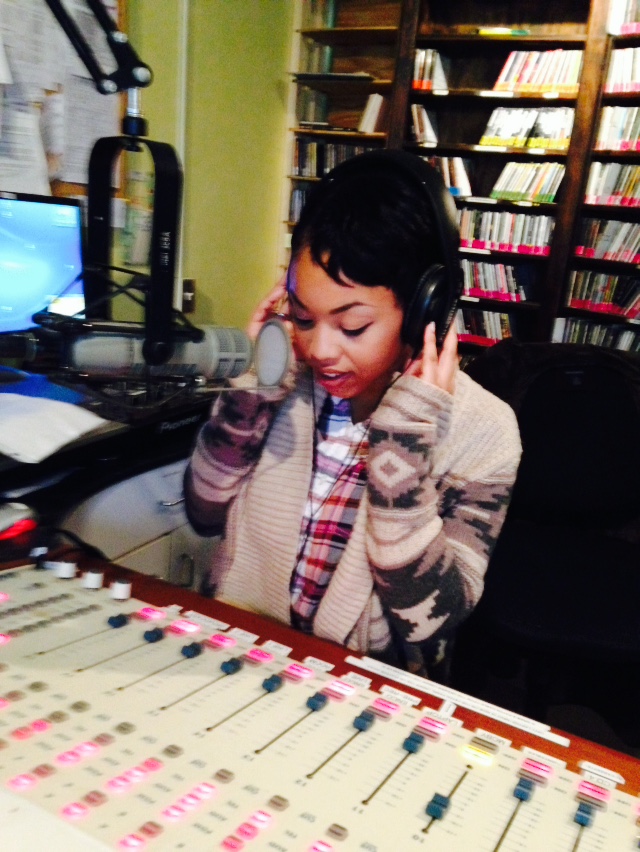
Shekeyah Hayes, student from Virginia Union University, talks about the prevalence and impact of domestic violence on campus.
Virginia Family Violence & Sexual Assault Hotline 1-800-838-8238

Today Carol talks about vimeo made and distributed by Cambridge Rape Crisis Center: Know Your Limits. Help change the conversation from telling women how to avoid being raped to instead telling potential rapists how to avoid raping others.
Listen to the episode here
Links:
Virginia Family Violence & Sexual Assault Hotline 1-800-838-8238
Carol talks about new legislation passed in Virginia designed to provide enhanced protections and access to services for survivors of sexual assault on campus.
Listen to the show here
Resources:
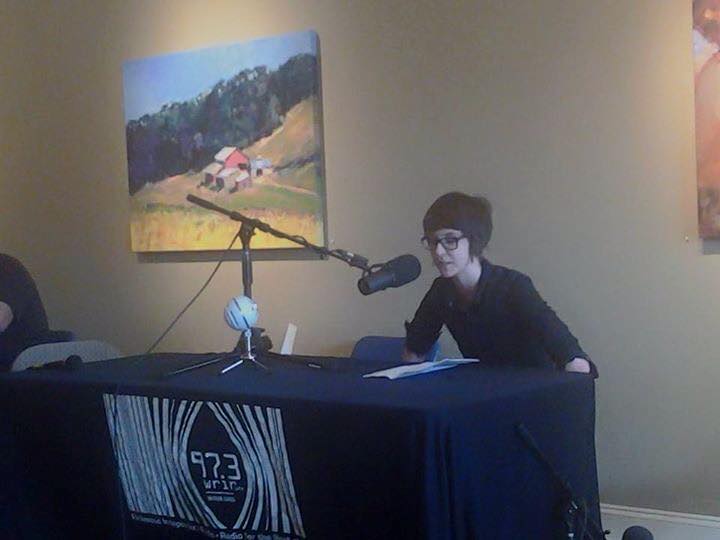
For this episode of the V WORD we recorded live at WRIR’s first Local Voices Live event. During this event the public got to see live some of their favorite shows/modules. The V Word was honored to be part of this event. Jenn read a piece on community accountability from a community activist who is also a black, queer, immigrant, woman.
Please listen to today’s episode here
Transcript here:
Hi my name is Shantae Taylor and I work with JusticeRVA (for racial justice against state sanctioned police violence and mass incarceration), NOACP/Richmond Resistance (for environmental justice) and with RRFP (for reproductive justice). As a queer person of color and immigrant I stand at the intersections of many issues but today I would like to talk about the intersection between state violence, violence against women and how we can create safer communities from the inside out. I want to start first here and talk a little bit about Richmond and then talk about how these issues apply more broadly. I want to be super clear that these issues may be triggering and would like us all to remember that part of accessibility is also keeping each ourselves and each other safe, I will give folks a moment to leave as needed.
-Rape Culture in RVA : I moved to Richmond five years ago and I have so much praise for such an amazing, dynamic and politically active city. However like most places, there is a very strong undercurrent of rape culture. For example, many known restaurants and bars in this city that have well known sexual assaulters and rapists in their midst and there has not as of yet been an city-wide effective campaign to hold those perpetrators accountable – just very brave people doing their best to speak out.
Another example would be our amazing and vibrant punk and hardcore scenes that we love so much. But unfortunately they also suffer from rape culture with it almost being a too common secret. Let us take the example of Dan Cleaves. (I use the example of a white man here to combat the stereotypes thrown against men of color. I also want to be clear that I am in no way using this example to stigmatize against HIV but I do think it is helpful to remember safe sexual practices and to remember that white people get HIV too! It is not just a black or brown problem).Dan Cleaves is a white male who frequented venues in Richmond and was just charged with sexually assaulting and knowingly infecting women with HIV with a particular targeting of transwomen. Many brave Richmonders, survivors included said enough was enough and were eventually able to drive him out of Richmond, but why did it take so long for people to listen to survivors and their wishes? Who is to blame? Are these individual failures or collective failures?
I would argue that these are collective failures. No individual can be solely be responsible for rape culture nor can they be solely responsible for ending it. That does not mean however that people do not need to be accountable for their own actions and take necessary steps to remedy the harm they have caused specific people and the community at large.
I will offer a personal story to help this stick. I am a survivor, however as a black woman I have serious concerns about approaching the police about what happened to me. What if they treat me differently because of my immigration status. How does my black appearance make me dehumanized, thus devalued and more rape-able and not worthy of being saved? How will my community view me? How will I be treated if I present to receive medical care? How does this relate to the long history of sexual violence against black women in this country? How does it relate to the systemic neglect of some black neighborhoods, environmental racism, economic deprivation, the war on drugs and “tough on crime” policing mentality – are these polices making our communities safer for women or more dangerous? How would this change if I were differently-abled? And why would I want to report my assaulter if I know that he would most likely not get proper treatment in jail/prison and more likely get worse after that process?
I think the INCITE! model of violence against women is especially helpful.” INCITE! Women, Gender Non-Conforming, and Trans people of Color* Against Violence is a national activist organization of radical feminists of color advancing a movement to end violence against women of color and our communities through direct action, critical dialogue and grassroots organizing.” INCITE! identifies “violence against women of color” as a combination of “violence directed at communities,” such as police violence, war, and colonialism, and “violence within communities,” such as rape and domestic violence.
They basically argue that if we want safer communities from the inside out we are going to have to be careful how we intermesh with the state in terms of mass incarceration instead of rehabilitative and restorative justice. They especially focus on the effects of violence on marginalized groups like women of color, queer folks, immigrants, incarcerated women and how we can lift their voices in this process. (this includes queer women, transwomen, differently abled and gender non conforming women too, because all women matter). It keeps in mind that violence against women of color often takes many forms from environmental racism to state sanctioned police violence and other structural forms of violence and that they need to be examined in a systemic way and addressed in order to really make solid gains in this process.
-I would argue that if we really want to see changes in rape culture in RVA we need to consider this model. Please connect with organizations such as Safe Harbor, VAVP and others that are working on this. You can read more about INCITE at incite-national.org. Thank you for your time.
Welcome to today’s edition of The V Word
Today’s show is a repost on Human Trafficking.
So here’s a question for those out there. Have you ever tried to coerce or force someone into having sex for money? Has someone ever tried to force or coerce you into having sex for money? Remember my story last week about how often I was approached? How often other women and trans-women were approached? How often children are approached?
My story last week was about the more open and brazen means to recruit someone into sex work. And were you thinking just adults are coerced? And did you imagine the stereotypical idea of a prostitute hanging on a street corner, with a pimp as her manager? You know, the TV image.
Human trafficking for sex is way broader and more pervasive than movies show, and involves more children than people are aware of. Where is this happening you may be asking by now? Not in Richmond you may be hoping. Yes in Richmond. In fact Richmond is listed along with Virginia Beach and Northern Virginia with the highest rates. While it may be focused on the larger cities with major highways, it happens all over the state.
Next you may want to know how it happens.
Traffickers look for people who have vulnerabilities: victims of sexual abuse, children living in poverty, children marginalized in our society by gender, race and economic class, and people who have been made vulnerable after natural disasters.
How does a Trafficker find vulnerable people: You probably did guess this one – through social networking, along with other means. If the parent is already being used as a sex worker, often the children are vulnerable to exploitation.
What happens next, once the Trafficker identifies someone? A process called grooming starts, promises are made to lure someone vulnerable. Another way is for a parent to pimp out their own child or outright sell the child. Yes you heard right, people sell their children and not just because they are evil people but also because they are desperate.
Once in, the victim is used in multiple ways, and not just on the street but through hotels, clubs, escort services, etc.
How does the Trafficker maintain control: isolation from others, shame, physical violence or threats of violence, drugs.
I know you will ask: why doesn’t the victim run away or ask for help? Remember the list of control tactics? All of those create fear and dependency and it’s extremely effective.
How many in Virginia: The Polaris Project reported 375 in a 6 month period. It is suspected it is widely under reported, like most sexual or interpersonal crimes.
So what is Virginia doing? The Virginia General Assembly just passed legislation that harshens the penalties for people who solicit children for sex. It allows felony prosecution now and listing on the sex offender REGISTRY .
.
What are some of the current laws you can use to prosecute such crimes?
§ 18.2-48. Abduction with intent to extort money or for immoral purpose, to extort money or pecuniary benefit, with intent to defile – for the purposes of prostitution, child pornography… is a Class 2 felony which can offer up life imprisonment.
18.2-46 Prostitution: commercial sexual conduct, commercial exploitation of a minor by offering money or its equivalent for the purposes of engaging in sexual acts is a Class 5 or 6 felony.
18.2-355 Taking, detaining, etc a person for prostitution, or being a parent or guardian consents to a person to be taken for prostitution or sex work is guilty of pandering and is a Class 4 felony.
Virginia’s new law will help close the gap and make it easier to prosecute offenders.
Need help or more information? Here are some options…
For information on how to report in the Richmond, Virginia, USA area, you can call the non-emergency line at 804-646-5100, that is 804-646-5100 or go by a local police station office. The main Richmond office is located at 200 West Grace street.
Are you a victim or do you know someone who needs help: The Gray Haven Project is a local resource for survivors of human trafficking. Tel: 804.365.2529 or email to info@thegrayhaven.org
For help with counseling and advocacy, local rape crisis centers and domestic violence shelters can provide services. In Virginia, USA, to find a center closest to you… you can call the Virginia Family Violence and Sexual Assault Hotline, hosted by The Virginia Sexual and Domestic Violence Action Alliance at 1-800-838-8238.
That is the Virginia Family Violence and Sexual Assault Hotline at 1-800-838-8238.
Listening from outside of Virginia? You can call the National Human Trafficking Hotline at 1-800-373-7888 that is 1-800-373-7888 or text 233722
Want to share a story or ask a question? Email me at thevword.radio@gmail.com or tweet me at my twitter account: @preventviolence. You can read the transcript for this show and past shows on my blog at thevword.org
The V Word is recorded in the studios of WRIR-LP 97.3, read and produced by me, Carol Olson.

On Today’s show, Fatima Smith from the YWCA of Richmond stops by to talk about #whYWait and their new teen program for Teen Dating Awaresness Month.
You can listen to the show here
and tune in Monday, February 9th, to hear Fatima talk more about African American women survivors of domestic violence and the disparities of services on our sister show: Community Conversations on Recovery.
Resources:
Today we talk with Ted Lewis, Associate Director LGBTQ Campus Life at the University of Richmond, about Title IX on college campuses, what this means for campuses in protecting students that have experienced sexual harassment and/or sexual violence, as well as it’s implications on LGBTQ students.
This is Part 1 of a 4 part series so please stay tuned! We will be posting the discussion in it’s entirety soon for those that want to listen to it all the way through
Do you need help or information? Here are some options…
You can call the Virginia Family Violence and Sexual Assault Hotline at 1-800-838-8238. They can connect you with local agencies, services, as well as university services.
If you have been assaulted and feel comfortable with calling the police, call 911.
You can now text/chat The Virginia Hotline Monday through Friday 4pm-8pm at http://www.vsdvalliance.org/
Text: (804) 793-9999 Monday-Friday 4pm-8pm to speak to someone today!
If you have been assaulted in the last 72 hours you can get a forensic exam to collect evidence and receive medical care. You can do this with and without reporting to the police as well.
Want to share a story or ask a question? Email me at thevword.radio@gmail.com or tweet me at my twitter account: @preventviolence. You can read the transcript for this show and past shows on my blog at www.thevword.org
Today’s host was Carol Olson. The V Word is recorded in the studios of WRIR-LP 97.3 and streamed at wrir.org, The V Word is co-produced by Carol Olson and Jenn Gallienne. Music was created by The Etching Tin
Welcome to today’s edition of The V Word. Your host today is Carol Olson.
Listen to today’s episode here
You have been hearing a lot about the charge against Bill Cosby for sexual assaulting numerous women. The question I have been hearing the most is “Why did they wait so long to report” “Why now?”
The reality is that many survivors of sexual assault wait to report. They can wait several days or wait years. and statistics show that 60% of rapes are not reported to the police.
There are many reasons why survivors do not feel safe to report immediately. The Sexual Assault Victim Advocacy Center has posted information on the reasons why:
Safety is an important factor. Many survivors will face further abuse, face stalking and harassment by the offender if they report, face retaliation in the workforce and in their social lives.
What can you do?
Need to find the statute of limitations on reporting sexual assault in your state, you can find information on the Victims of Crime . org website (our blog will have the direct link for you)
In Virginia, there are no statutes of limitations in reporting. You can report at any time. Also, in 2007 then Governor Tim Kaine put in force Executive Orders that states a survivor of violence can go to an emergency room and request a PERK exam, that is a physical evidence recovery kit, without having to report to police and that the state will store the evidence until the survivor is ready to report. As evidence needs to be retrieved from the body, usually within 72 hours, this order allows survivors to have evidence collected but still have time to report.
Other places you can find information in Virginia is: Department of Criminal Justice Services website www.dcjs.virginia.gov
For information on how to report an assault in the Richmond, Virginia, USA are, you can call the non-emergency line at 804-646-5100 or go by a local police station office. The main Richmond office is located at 200 West Grace Street.
To get a forensic exam to collect evidence and receive medical care, the local hospitals in the Richmond area with Forensic Nurse Examiners are at Medical College of Virginia and St. Mary’s Hospital.
For help with counseling and advocacy, local rape crisis centers, child advocacy centers and domestic violence shelters can provide services. To find a center closest to you… you can call the Virginia Family Violence and Sexual Assault Hotline at 1-800-838-8238. That is the Virginia Family Violence and Sexual Assault Hotline at 1-800-838-8238.
Want to share a story or ask a question? Email me at thevword.radio@gmail.com or tweet me at my twitter account: @preventviolence. You can read the transcript for this show and past shows on my blog at www.thevword.org
The V Word is recorded in the studios of WRIR-LP 97.3 and streamed at wrir.org, read and produced by Carol Olson and Jennifer Gallienne. Sound Engineering is provided by Bryon Connelly. Music is provided by the Etching Tin.
Welcome to today’s edition of The V Word. Today we are talking about justice.
Listen to today’s episode here
Do you need help or information? Here are some options…
If you have been assaulted and feel comfortable with calling the police, call 911.
If you are not comfortable with talking to the police, but want to talk to someone, you can call the Virginia Family Violence and Sexual Assault Hotline at 1-800-838-8238.
You can now text/chat The Virginia Hotline at http://www.vsdvalliance.org/
If you have been assaulted in the last 72 hours you can get a forensic exam to collect evidence and receive medical care. You can do this with and without reporting to the police. The local hospitals in the Richmond area with Forensic Nurse Examiners are at Medical College of Virginia and St. Mary’s Hospital.
The Richmond area has a new regional hotline specific to the needs of sexual and domestic violence survivors: 804-612-6126
For help with counseling and advocacy, find a Domestic Violence/Sexual Assault Agency near you . To find a center near you call the Virginia Family Violence and Sexual Assault Hotline at 1-800-838-8238.
Are you a family member or a bystander and want know how you can help?
Get involved with your local domestic violence/rape crisis agency. Donate to services that help survivors recover and heal. The Virginia Family Violence and Sexual Assault Hotline is also available to family/partners/loved ones/ and allied professionals.
Want to share a story or ask a question? Email me at thevword.radio@gmail.com or tweet me at my twitter account: @preventviolence. You can read the transcript for this show and past shows on my blog at www.thevword.org
Today’s host was Carol Olson. The V Word is recorded in the studios of WRIR-LP 97.3 and streamed at wrir.org, The V Word is produced by Carol Olson. Music was created by The Etching Tin
 Carol Olson
 Jenn
Jenn The V Word