Search

The V Word

Advocating to end sexual and domestic violence

Category

Awareness Campaigns

Sample Proclamation for Teen Dating Violence Awareness Month

Have you outreached your Mayor or Governor to establishe a teen dating violence awareness month proclamation?  See a sample proclamation below:

Whereas, dating violence is a reality for many youth, and an issue that many parents are unaware of; and,

Whereas, 1 in 3 young people are affected by physical, sexual, or verbal dating violence, with 1 in 5 in a serious relationship reporting having been slapped, pushed, hit, threatened or coerced by a partner, and breakups can be a time of even greater risk even when a relationship was never physically abusive; and,

Whereas, Young people can choose better relationships when they understand that healthy relationships are based on respect and learn to identify early warning signs of an abusive relationship; and

Whereas, Elimination of dating violence must be achieved through cooperation of individuals, organizations, and communities; and,

Whereas, Dating Violence Awareness & Prevention Month provides an excellent opportunity for citizens to learn more about preventing dating violence and to show support for the numerous organizations and individuals who provide critical advocacy, services and assistance to victims;

Now therefore be it, Resolved, That I, ________________, do hereby proclaim the month of February, 2010, as Dating Violence Awareness & Prevention Month in ____________.

Please send a copy of your Mayor or Governor’s proclamation to StopDatingViolence.org – The EMILY Fund PO Box 430, Roosevelt, NJ 08555-0430 or send a scan to: info@emilyfund.org or Fax to 1-888-247-1291

January is National Slavery and Human Trafficking Prevention Month

THERE ARE MORE THAN 30 MILLION SLAVES IN THE WORLD TODAY, MORE THAN AT ANY OTHER POINT IN HUMAN HISTORY.

President Barack Obama has proclaimed January “National Slavery and Human Trafficking Prevention Month”

“This month, we rededicate ourselves to stopping one of the greatest human rights abuses of our time. Around the world, millions of men, women, and children are bought, sold, beaten, and abused, locked in compelled service and hidden in darkness. They toil in factories and fields; in brothels and sweatshops; at sea, abroad, and at home. They are the victims of human trafficking — a crime that amounts to modern-day slavery.

A press statement put out by NAAG President and Washington Attorney General Rob McKenna states:

“‪Human trafficking is a $32 billion global industry, the fastest growing and second largest criminal activity in the world, tied with arms and after drug dealing. I applaud President Obama’s effort to bring this issue to the forefront in the minds of Americans by proclaiming January as National Slavery and Human Trafficking Prevention Month.”

The Polaris Project defines Human Trafficking as:

“Human trafficking is a form of modern-day slavery where people profit from the control and exploitation of others. As defined under U.S. federal law, victims of human trafficking include children involved in the sex trade, adults age 18 or over who are coerced or deceived into commercial sex acts, and anyone forced into different forms of “labor or services,” such as domestic workers held in a home, or farm-workers forced to labor against their will. The factors that each of these situations have in common are elements of force, fraud, or coercion that are used to control people.  Then, that control is tied to inducing someone into commercial sex acts, or labor or services.  Numerous people in the field have summed up the concept of human trafficking as “compelled service.”  Every year, human traffickers generate billions of dollars in profits by victimizing millions of people around the world, and here in the United States.  Human trafficking is considered to be one of the fastest growing criminal industries in the world. Click here to access human trafficking resource packs.”

they further define Sex Trafficking as:

“Sex trafficking occurs when people are forced or coerced into the commercial sex trade against their will.  Child sex trafficking includes any child involved in commercial sex.  Sex traffickers frequently target vulnerable people with histories of abuse and then use violence, threats, lies, false promises, debt bondage, or other forms of control and manipulation to keep victims involved in the sex industry.  Sex trafficking exists within the broader commercial sex trade, often at much larger rates than most people realize or understand.  Sex trafficking has been found in a wide variety of venues of the overall sex industry, including residential brothelshostess clubs, online escort servicesfake massage businessesstrip clubs, and street prostitution. For sex trafficking resource packs, click here.”

Not For Sale hosts information and provides programs to help communities vulnerable to exploitation.  They have a Slavery Map depicting incidents of trafficking.  Post your story.

Stalking: Know It, Name It, Stop It

January is National Stalking Awareness Month, a time to focus on a crime that affects 6.6 million victims a year.

While legal definitions of stalking vary from one jurisdiction to another, a good working definition of stalking is a course of conduct directed at a specific person that would cause a reasonable person to feel fear.

STALKING VICTIMIZATION

• 6.6 million people are stalked in one year in the United States.
• 1 in 6 women and 1 in 19 men have experienced stalking victimization at some point during their lifetime in which they felt very fearful or believed that they or someone close to them would be harmed or killed. Using a less conservative definition of stalking, which considers any amount of fear (i.e., a little fearful, somewhat fearful, or very fearful), 1 in 4 women and 1 in 13 men reported being a victim of stalking in their lifetime.
• The majority of stalking victims are stalked by someone they know. 66% of female victims and 41% of male victims of stalking are stalked by a current or former intimate partner.
• More than half of female victims and more than 1/3 of male victims of stalking indicated that they were stalked before the age of 25.
• About 1 in 5 female victims and 1 in 14 male victims experienced stalking between the ages of 11 and 17. [Michele C. Black et al., “The National Intimate Partner and Sexual Violence Survey: 2010 Summary Report,” (Atlanta, GA: National Center for Injury Prevention and Control, Centers for Disease Control and Prevention, 2011).]
• 46% of stalking victims experience at least one unwanted contact per week.
• 11% of stalking victims have been stalked for 5 years or more. [Katrina Baum et al., “Stalking Victimization in the United States,” (Washington, DC: Bureau of Justice Statistics, 2009).]

STALKING AND INTIMATE PARTNER FEMICIDE

• 76% of intimate partner femicide victims have been stalked by their intimate partner.
• 67% had been physically abused by their intimate partner.
• 89% of femicide victims who had been physically assaulted had also been stalked in the 12 months before their murder.
• 79% of abused femicide victims reported being stalked during the same period that they were abused.
• 54% of femicide victims reported stalking to police before they were killed by their stalkers.
[Judith McFarlane et al., “Stalking and Intimate Partner Femicide,” Homicide Studies 3, no. 4 (1999).]

RECON STUDY OF STALKERS

• 2/3 of stalkers pursue their victims at least once per week, many daily, using more than one method.
• 78% of stalkers use more than one means of approach.
• Weapons are used to harm or threaten victims in 1 out of 5 cases.
• Almost 1/3 of stalkers have stalked before.
• Intimate partner stalkers frequently approach their targets, and their behaviors escalate quickly. [Kris Mohandie et al.,“The RECON Typology of Stalking: Reliability and Validity Based upon a Large Sample of North American Stalkers,” Journal of Forensic Sciences, 51, no. 1 (2006).]

IMPACT OF STALKING ON VICTIMS

• 46% of stalking victims fear not knowing what will happen next.
• 29% of stalking victims fear the stalking will never stop.
• 1 in 8 employed stalking victims lose time from work as a result of their victimization and more than half lose 5 days of work or more.
• 1 in 7 stalking victims move as a result of their victimization. [Baum et al.]
• The prevalence of anxiety, insomnia, social dysfunction, and severe depression is much higher among stalking victims than the general population, especially if the stalking involves being followed or having one’s property destroyed. [Eric Blauuw et al., “The Toll of Stalking,” Journal of Interpersonal Violence, 17, no. 1 (2002):50-63.]

STALKING LAWS

• Stalking is a crime under the laws of 50 states, the District of Columbia, the U.S. Territories, and the Federal government.
• Less than 1/3 of states classify stalking as a felony upon first offense.
• More than 1/2 of states classify stalking as a felony upon second or subsequent offense or when the crime involves aggravating factors.
• Aggravating factors may include: possession of a deadly weapon, violation of a court order or condition of probation/parole, victim under 16 years, or same victim as prior occasions.
For a compilation of state, tribal, and federal laws visit www.victimsofcrime.org/src.

__________________________________________________________________________________________________________________________________

The mission of the Stalking Resource Center is to enhance the ability of professionals, organizations, and systems to effectively respond to stalking. The Stalking Resource Center envisions a future in which the criminal justice system and its many allied community partners will effectively collaborate and respond to stalking, improve victim safety and well-being, and hold offenders accountable. Visit us online at www.victimsofcrime.org/src. Contact us at 202-467-8700 or src@ncvc.org.
This document was developed under grant number 2008-TA-AX-K017 from the Office on Violence Against Women (OVW) of the U.S. Department of Justice. The opinions and views expressed in this document are those of the author(s) and do not necessarily represent the official position of the Office on Violence Against Women of the U.S. Department of Justice. For more information on the U.S. Department of Justice Office on Violence Against Women visit http://www.ovw.usdoj.gov

This document may be reproduced only in its entirety. Any alterations must be approved by the Stalking Resource Center

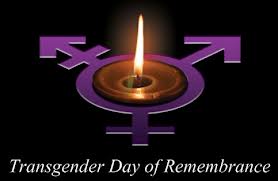
Transgender Day of Remembrance

This month holds the Transgender Day of Remembrance. On this day show support for those among us who are targeted for violence due to their differences from the masses. Transgender individuals are one of the most vulnerable groups to interpersonal violence. Transgender individuals also have many barriers to accessing services for recourse when victimized. Transgender individuals are at a high risk of being assaulted and killed.

On Tuesday, November 20th is Transgender Day of Remembrance to share grief over loss of friends, partners and family members who have been lost due to violence against them. The Day of Remembrance is also a day to make a commitment to pursue equality for all, display awareness and inclusiveness in your everyday life and to be a model of non-violence.

Check out your area for events. For those in the Richmond, Virginia area, below are some upcoming events:

Monday, November 12 at 6 pm – Alliance for Progressive Values Salon with Dr. Lisa Griffin, Speaker. Helen’s Restaurant, 2527 W. Main Street. (corner of Main and Robinson)

Sunday, November 18 at 7 pm – Queer Action – VCU Candlelight Vigil held at the VCU Amphitheater

Tuesday, November 20 at Noon – Transgender Day of Remembrance Flash Mob, Queer Action – VCU held at The Compass, VCU Campus

Tuesday, November 20 at Noon – Equality in the Workplace Panel, Brown Bag Lunch by University of Richmond Common Ground held at the Downtown Campus, 626 E. Broad Street, Suite 100

Tuesday, NOvember 20 at 7 pm – Transgender Day of Remembrance – Candlelight Memorial with reception to follow held at the First Unitarian Universalist Church of Richmond, 1000 Blanton Avenue.

For Richmond events check out their social network sites:

Facebook

Twitter: @RVATDOR

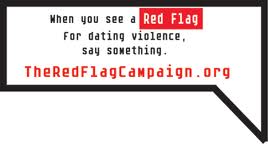
Red Flag Campaign

It’s that time of year again, October and the Red Flag Campaign Awareness Events are happening at Universities and Colleges around the state. The Virginia Sexual and Domestic Violence Action Alliance are collaborating with identified schools to bring awareness to dating violence, sexual assualt, and other interpersonal violence in recognition of Domestic Violence Awareness Month.

The Red Flag Campaign is a public awareness campaign designed to address dating violence and promote the prevention of dating violence on college campuses. The campaign was created using a “bystander intervention” strategy, encouraging friends and other campus community members to “say something” when they see warning signs (“red flags”) for dating violence in a friend’s relationship. The campaign posters reflect racially and ethnically diverse models, and illustrate both heterosexual and same-sex relationships.

The Campaign is a project of the Virginia Sexual and Domestic Violence Action Alliance, and was created by college students, college personnel, and community victim advocates. The Campaign is funded by grants from the Verizon Foundation, Verizon Wireless, Macy’s Foundation, and the Centers for Disease Control and Prevention.

Research indicates that in 21% of college dating relationships, one of the partners is being abused. That’s 1 in 5 relationships (see citation below). Whether you are a student seeking help for yourself or a friend, or a professional seeking information about how you can help students, we hope the materials on this website will be helpful to you.

Check out the new series of Red Flag Campaign posters.

C. Sellers and M. Bromley, “Violent Behavior in College Student Dating Relationships,” Journal of Contemporary Criminal Justice (1996)

reposted from http://www.theredflagcampaign.org/

SlutWalk – RVA style…. come out and advocate against victim blaming

On Saturday, September 22, Richmond will hold its first SlutWalk.  SlutWalk Richmond has been organized much like SlutWalk Toronto, first held last April in response to the statement the Toronto Police made that “women should avoid dressing like sluts in order not to be victimized”.  As news of that event grew, the international outcry and support were astounding.  The purpose of these walks is to change the perception of sexual assault and what has become known as “slut-slamming”.

In 2010*, 4,687 forcible sex offenses were reported in the state of Virginia.  Sexual offenses as a whole remain largely unreported to law enforcement.  Only half (50%) of the individuals seeking sexual assault crisis services had reported their assault to law enforcement.  It is clear that there is still a sense of shame and blame surrounding a crime that is not the victim’s fault and needs to be admonished.

We will join communities around the world this year as we bring awareness to the Richmond area, which is home to more than five colleges, young adults and many sexual assault survivors.  As the organizer of this local event, I am encouraging everyone to attend the walk to show his or her support for our community’s sexual assault survivors, to bring an end to derogatory remarks and victim blaming, and to remove the thought that a person’s attire and behavior solicit being sexually assaulted.

This is a grass roots event with no formal financial support but is funded by passion, sweat and tears.  I am asking local galleries and artists to align their missions with the mission and principals of SlutWalk Richmond and be one of our Allies.  My hope is that by including community Allies on the SlutWalk Richmond website, people will realize the scope and importance of promoting education about rape and sexual assault.  You will become an important part of our community’s awareness.  Should you wish to be more than an Ally and be one of our Supporters, you will help further the success of the event.  Donations toward promotion materials, posters, advertising and permits would be greatly appreciated.  This day will be a victorious milestone for sexual assault survivors.

For more information on how we can all work together to raise awareness of sexual assault issues, please feel free to call Helen Rogers at 804.484.4908, or e-mail slutwalkrichmond@gmail.com.  Thank you for your consideration.

Sincerely,

Helen Rogers

Chairperson/ Organizer

SlutWalk Richmond . 2012
www.slutwalkrichmond.org

“Like” us on Facebook:  www.facebook.com/slutwalkrichmondva

*Statistics provided by the “Domestic Violence and Sexual Assault in Virginia” 2011 Annual Report 

Sexual Assault Awareness Month – Virginia Facts


Sexual assault affects every community in Virginia

 Nearly 1 in 5 women have been raped in their lifetime while 1 in 71 men have been raped in their lifetime. 1

 Approximately 80% of female victims experienced their first rape before the age of 25 and almost half ex­perienced the first rape before age 18 (30% between 11-17 years old and 12% at or before the age of 10). 28% of male victims of rape were first raped when they were 10 years old or younger.2

 Sexual assault profoundly affects children and teens

 56% of youth report experiences of sexual assault and coercion. 

In 2010, Sexual Assault Crisis Centers in Virginia…3

  • responded to 61,860 hotline calls
  • offered 50,949 hours of advocacy services to 4,903 adults
  • provided 26,570 hours of advocacy services to 2,123 children


You can help too…

  Three out of four people affected by sexual violence turn to family and friends for help before contacting a Sexual Assault Crisis Center.4


1 -2  National Intimate Partner and Sexual Violence Survey (NISVS), 2010. Centers for Disease Control and Prevention. Published December, 2011.

3-4      VAdata: The Virginia Sexual & Domestic Violence Data Collection System, 2010.

Stalking: Know it, Name it, Stop it

January is National Stalking Awareness Month, a time to focus on a crime that affects

3.4 million victims a year.

1 This year’s theme—“Stalking: Know It. Name It. Stop It.”—challenges the nation to fight this dangerous crime by learning more about it.

Stalking is a crime in all 50 states and the District of Columbia, yet many victims and criminal justice professionals underestimate its seriousness and impact. In one of five cases, stalkers use weapons to harm or threaten victims,

2 and stalking is one of the significant risk factors for femicide (homicide of women) in abusive relationships.

3 Victims suffer anxiety, social dysfunction, and severe depression at much higher rates than the general population, and many lose time from work or have to move as a result of their victimization.

4Stalking is difficult to recognize, investigate, and prosecute. Unlike other crimes, stalking is not a single, easily identifiable crime but a series of acts, a course of conduct directed at a specific person that would cause that person fear. Stalking may take many forms, such as assaults, threats, vandalism, burglary, or animal abuse, as well as unwanted cards, calls, gifts, or visits. One in four victims reports that the stalker uses technology, such as computers, global positioning system devices, or hidden cameras, to track the victim’s daily activities.

5 Stalkers fit no standard psychological profile, and many stalkers follow their victims from one jurisdiction to another, making it difficult for authorities to investigate and prosecute their crimes.

Communities that understand stalking, however, can support victims and combat the crime.

If more people learn to recognize stalking, we have a better chance to protect victims and prevent tragedies.

Your local rape crisis or domestic violence center can offer information, resources, or help.

For additional resources to help promote National Stalking Awareness Month, please visit http://stalkingawarenessmonth.org  and www.ovw.usdoj.gov 

1 Baum et al.,

Stalking Victimization in the United States

, Washington, DC: U.S. Department of Justice, Office of Justice Programs,

Bureau of Justice Statistics, 2009, http://www.ojp.usdoj.gov/bjs/pub/pdf/svus.pdf (accessed September 29, 2009).

2 Ibid.

3 Jacquelyn C. Campbell et al., “Risk Factors for Femicide in Abusive Relationships: Results from a Multi-site Case Control Study,”

American Journal of Public Health

93 (2003): 7.

4 Ibid.

5 Baum,

Stalking Victimization in the United States.

What Every Man Can Do

to end men’s violence against women

1. LISTEN TO WOMEN…AND LEARN FROM WOMEN

Who knows better about violence against women than women who experience it? Learn about violence by asking a woman who trusts you how violence has affected her life. Then, if she feels comfortable to talk, sit back and listen. Your role isn’t to challenge her on the details, nor debate whether something really should have bothered her or not. It is to listen. Simply trust that if she tells you something hurt her, then it did hurt her.

Turn to your local women’s organizations. Read their publications. Contribute financially. Learn from them.

2. LEARN ABOUT THE PROBLEM

Violence against women includes physical and sexual assault, sexual harassment, and emotional abuse. Not all violence leaves visible scars. Emotional violence includes regular subjection to demeaning jokes, domineering forms of behavior, and sexual harassment. The basic rights that most men enjoy – safety in their homes, ability to go out at night, a job free of harassment – are a source of fear for women in much of the world.

A common myth is that most violence is committed by strangers. The fact is, when a woman faces violence it is usually by a man she knows – her husband, boyfriend, father, friend or employer.

Violence against women happens everywhere, regardless of class, race or ethnicity, and religion.

3. LEARN WHY SOME MEN ARE VIOLENT

Men are not naturally violent. Violence is something that some men learn. Men’s violence is a result of the way many men learn to express their masculinity in relationships with women, children, and other men. Many men learn to think of power as the ability to dominate and control the people and the world around them. This way of thinking makes the use of violence acceptable to many men.

Some violent incidents by men can be linked to substance abuse. But substances don’t cause violence. Genes don’t cause violence. Ultimately, it is the attempt by some men to dominate women or some men’s attempts to dominate other men or groups of men. Violence is a way of asserting power, privilege, and control.

4. CHALLENGE SEXIST JOKES AND COMMENTS THAT DEGRADE WOMEN

Sexist jokes and language help create a climate where forms of violence and abuse have too long been accepted. Words that degrade women reflect a society that has historically placed women in a second class position. By reflecting this reality they once again put women “in their place” even if that isn’t the intention. One of the most difficult things for men is to learn to engage with other men on this issue. To question sexist language. To speak up when men talk lightly of violence against women.

5. IDENTIFY AND EXPOSE SEXUAL HARASSMENT AND VIOLENCE IN YOUR WORKPLACE, SCHOOL, AND FAMILY.

Sexual harassment refers to unwanted sexual advances or sexually-oriented remarks or behaviors that are unwelcome by another person. Flirting and joking can be fine but only if they are consensual and wanted. Men can join women in opposing sexual harassment by learning to spot it and learning to say something to stop it.

6. SUPPORT LOCAL WOMEN’S PROGRAMS

Around the world, dedicated women have created support services for women who are survivors of men’s violence: safe houses for battered women, rape crisis centers, counseling services, and legal aid clinics. Women escaping violent situations depend on these services. They deserve men’s support and our financial backing.

7. EXAMINE HOW YOUR OWN BEHAVIOR MIGHT CONTRIBUTE TO THE PROBLEM

Most men will never be physically or sexually violent. But we all need to examine ways we might try to control women. Do we blame the victim for an assault? Do we dominate conversations? Do we put women down? Do we limit their activities? Do we make all the decisions in our relationships? We all must think about the choices we make.

Real change starts from within.

reposted from the The White Ribbon Campaign & the Virginia Department of Health
Create a free website or blog at WordPress.com.

Up ↑