Search

The V Word

Advocating to end sexual and domestic violence

Some facts and info on sexual assault

After today’s Abolish the Blame event and seeing the number of young people who attended, I decided to provide information about sexual assault of college students.

Sexual assault/rape on college campuses is more prevalent than many people realize. While colleges may report low numbers, the local rape crisis and domestic violence center will provide much higher numbers.

According to the American Association of University Women and local rape crisis centers,

20 to 25 percent of college women are raped while attending college.
65 percent of these attacks go unreported.
Alcohol is involved in 75 percent of attacks.
{Source: The American Association of University Women, 2004)

These statistics mirror statistics of sexual assaults globally, 1 in 4 women are victims of sexually violent crimes. Why is such a high percentage of assaults unreported? Many colleges and universities have protocols in place that make reporting difficult or unwelcome. The cases are handled on campus and may not be reported to law enforcement and are therefore not prosecuted. Victim-blaming is still a factor in many communities and influences survivors of violence to not report. Unfortunately, many myths still are present in society and inaccurate beliefs are still held, such as: wearing tight or revealing clothing causes rape, being out late at night, or wearing makeup. Alcohol is used frequently as a means to reduce judgement and impair the ability to provide consent.

These are myths. There is no correlation between certain clothing and rape. No rape victim is ever “asking for it.” If you are the victim of sexual violence, please understand that what happened was wrong and that it was not your fault.

What should you do if you get raped?

Get yourself to safe place, call 911. Sexual assault is an emergency. If at all possible, find a supportive person who can help you, like a close friend or a residence assistant.

Resist the urge to take a bath or a shower. Cleaning yourself is a natural impulse, but don’t. Your body is covered with physical evidence that can help catch the rapist. Preserve all evidence, such as your clothing.

Go to an emergency room and get medical attention immediately! Even if you do not plan to report the rape, it is crucial that you seek help at a local emergency room, campus health center or elsewhere. Prompt medical assistance reduces you chance of developing some STDs, and many women choose to take the morning after pill to prevent pregnancy. Rape victims also sustain other physical injuries, and you may be more hurt than you realize. Yes, an intimate medical exam is the last thing you want after such a horrible experience, but it’s something you need to do for the sake of your health.

Get psychological counseling as soon as possible. Rape is a traumatic experience, and most women need help coping. Be kind to yourself and get the help you need! Most communities have rape crisis centers and may provide counseling. Colleges also have counseling centers.

Report the assault to the campus and/or city police. Many women choose not to do this, and their decisions should be respected. But if you are raped, please consider reporting it. Doing so may prevent the rapist from hurting someone else, and if enough women report rapes, rape statistics may go down because the consequences will go up. And even if the rapist never strikes again, rape is a crime and needs to be reported.
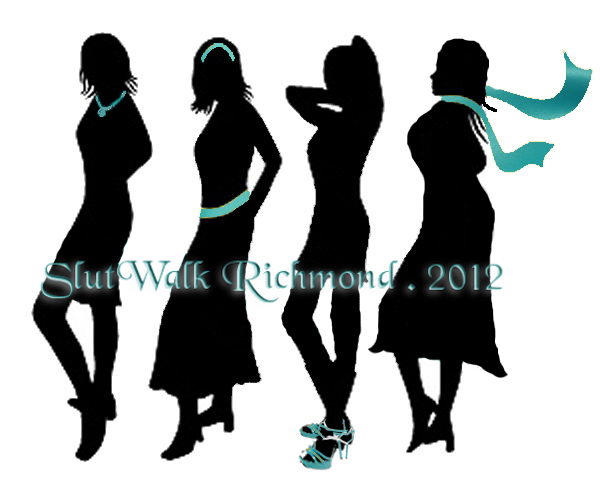
SlutWalks

I think the great thing about this cause area, to end violence against women and other genders, is the diversity of opinions about who women are, who victims are, who survivors of violence are. Our cause area is made up of billions of faces, representing all aspects of society. This means we gather our strength from our diversity, because it will take billions of voices to make this change. It only makes it harder to gather such diversity into a cohesive voice to make change, but we must do it. The idea of slutwalks comes out of the nonsense that clothing invites rape and pushes wearers to the status of “less than” in our society. These events, like all events that push boundaries, will bring awareness to those who may need to see the ludicrousness of linking clothing to rape acceptance. Not all people, even victims, will understand them. There are, of course, many campaigns that exist to address these issues in other formats. I hope we can support them all, as it takes many, many types of speech to effect changes in society. I think we may want to consider forgiving survivors who can’t understand all the messages our cause needs to put out there because their wounds are deep and we don’t know what will trigger them. Just as we don’t always know what someone else does that could trigger us. Solidarity takes acceptance and support, however different we think we need to pursue this common goal.

Check out your local community for an Abolish the Blame or SlutWalk event and consider supporting their message to stop blaming victims of crime.

September 22nd is an Abolish the Blame event in Richmond, Virginia. Check them out on Facebook events and their page: slutwalkrva. And follow them on twitter slutwalkrva

End Violence Against Women International

Do you know about End Violence Against Women International (EVAWI)? www.evawintl.org
They are an international organization dedicated to creating a world where gender-based violence is unacceptable; where perpetrators are held accountable; and victims receive the compassion, support and justice they deserve.

They have free trainings based off their website and an annual conference in April. Check out what they offer and help support their cause as their cause is our cause.

Help me – End Violence Against Women

Some interesting Research and Literature for Advocates and Providers to check out…


Research / Literature

Preventing Children’s Exposure to Violence: The Defending Childhood Initiative
by Sarah B. Berson, Jolene Hernon and Beth Pearsall
An NIJ-funded evaluation takes a close look at communities developing strategies to address childhood exposure to violence. See attached PDF file labeled 238485.

New summer 2012 issue of Age in Action, published by the Virginia Center on Aging and the Virginia Department for Aging and Rehabilitative Services can be found at http://www.sahp.vcu.edu/vcoa/newsletter/ageaction/agesummer12.pdf

Social Media, Social Life: How Teens View Their Digital Lives is the latest research report from Common Sense Media’s Program for the Study of Children and Media. We surveyed over 1,000 13- to 17-year-olds nationally to understand how they perceive social media (like Facebook and Twitter) affects their relationships and feelings about themselves. Read highlights from the study in the info graphic below, and visit our research page to download the full report. http://www.commonsensemedia.org/research

The Perfect Shade of Change: Resources for Sexual Violence Preventionists Creating Safe & Healthy Communities
This information packet provides guidance to prevention practitioners at local, state, tribal, territory, and national organizations to work more effectively toward the goal of eliminating sexual violence in their communities.  http://nsvrc.org/publications/nsvrc-publications-information-packets/perfect-shade-change-resources-sexual-violence


SlutWalk – RVA style…. come out and advocate against victim blaming

On Saturday, September 22, Richmond will hold its first SlutWalk.  SlutWalk Richmond has been organized much like SlutWalk Toronto, first held last April in response to the statement the Toronto Police made that “women should avoid dressing like sluts in order not to be victimized”.  As news of that event grew, the international outcry and support were astounding.  The purpose of these walks is to change the perception of sexual assault and what has become known as “slut-slamming”.

In 2010*, 4,687 forcible sex offenses were reported in the state of Virginia.  Sexual offenses as a whole remain largely unreported to law enforcement.  Only half (50%) of the individuals seeking sexual assault crisis services had reported their assault to law enforcement.  It is clear that there is still a sense of shame and blame surrounding a crime that is not the victim’s fault and needs to be admonished.

We will join communities around the world this year as we bring awareness to the Richmond area, which is home to more than five colleges, young adults and many sexual assault survivors.  As the organizer of this local event, I am encouraging everyone to attend the walk to show his or her support for our community’s sexual assault survivors, to bring an end to derogatory remarks and victim blaming, and to remove the thought that a person’s attire and behavior solicit being sexually assaulted.

This is a grass roots event with no formal financial support but is funded by passion, sweat and tears.  I am asking local galleries and artists to align their missions with the mission and principals of SlutWalk Richmond and be one of our Allies.  My hope is that by including community Allies on the SlutWalk Richmond website, people will realize the scope and importance of promoting education about rape and sexual assault.  You will become an important part of our community’s awareness.  Should you wish to be more than an Ally and be one of our Supporters, you will help further the success of the event.  Donations toward promotion materials, posters, advertising and permits would be greatly appreciated.  This day will be a victorious milestone for sexual assault survivors.

For more information on how we can all work together to raise awareness of sexual assault issues, please feel free to call Helen Rogers at 804.484.4908, or e-mail slutwalkrichmond@gmail.com.  Thank you for your consideration.

Sincerely,

Helen Rogers

Chairperson/ Organizer

SlutWalk Richmond . 2012
www.slutwalkrichmond.org

“Like” us on Facebook:  www.facebook.com/slutwalkrichmondva

*Statistics provided by the “Domestic Violence and Sexual Assault in Virginia” 2011 Annual Report 

Virginia General Assembly Report 2012

Priority Areas for those interested in sexual or domestic violence related legislation.

1. Protect Funding for Crisis and Safety Services – While it is good news that the adopted budget in the 2012 session does not propose any additional reductions in funding for sexual and domestic violence services, unfortunately the adopted budget uses one-time fund balances to restore $1.2 million in funding for domestic violence services that was at risk due to changes in the administration and availability of TANF funds. These one-time funds will not be available in 2014 or beyond. Thus, the $1.2 million in funding for the core services will be eliminated when this short-term solution is no longer available unless other funds are allocated for these purposes.

2. “Peace Begins at Home” specialized interest license plate – DEFEATED. These bills were continued to 2013 because the required 450 pre-paid applications were not collected. These bills would have authorized the issuance of revenue-sharing special license places bearing the legend: PEACE BEGINS AT HOME to support the programs of the Action Alliance for the prevention of sexual and domestic violence in Virginia. Help us get this passed next year. Sign up to buy a license plate through your local Virginia center or the Action Alliance.

3. Enhance the Prosecution of Strangulation – PASSED! These bills make strangulation a felony in Virginia. The law provides that any person who, without consent, impedes the blood circulation or respiration of another person by knowingly, intentionally and unlawfully applying pressure to the neck, causing wounding or bodily injury is guilty of a Class 6 felony.

4. Improve Virginia’s Response to Sexual Assault on College Campuses – PASSED!
SB 302 (Senator Howell) & HB 965 (Delegate Rob Bell) – These bills require campus police to enter into mutual aid agreements with a local law-enforcement agency or the state police for cooperation in providing assistance with the investigation of deaths and alleged rapes occurring on college campuses. These bills do not mandate any one law enforcement to take the lead over another.
SB 301 (Senator Howell) & HB 969 (Delegate Rob Bell) – These bills add chiefs of campus police located within the jurisdiction to the list of persons the Attorney for the Commonwealth must invite to the annual meeting to establish guidelines for a coordinated response to sexual assault.

5. Strengthen the Enforcement of Federal Firearm Prohibitions for Persons Convicted of Domestic Violence SB 224 (Senator Herring) – DEFEATED – This bill would have created a way to differentiate charges and convictions for assault and battery that involved the use of physical force from convictions for assault and battery that did not involve physical force. This change in law is needed to apply federal firearm prohibitions appropriately to persons convicted of assault and battery of a family or household member due to federal court decision, U.S. v. White, issued in 2010.

Information provided from The Virginia Sexual and Domestic Violence Action Alliance. Contact Kristine Hall at 804-377-0335 or khall@vsdvalliance.org for more information.

More reports on tomorrow’s blog…

Seeking individuals for a series of portraits

I am seeking to do portraits of individuals who are survivors of sexual and interpersonal violence. I want to collect stories of surviving, healing, and thriving. If you would like to be a subject, contact me at olson.carolann@gmail.com.

Send me your story, photos of you if you are comfortable with that, stories of your healing and where you are now. I plan to exhibit or show what I create once completed in some form.

I look forward to the stories..

Virginia’s Sexual Assault Crisis Centers are here to help

In 2010, Sexual Assault Crisis Centers in Virginia…

  • responded to 61,860 hotline calls
  • offered 50,949 hours of advocacy services to 4,903 adults
  • provided 26,570 hours of advocacy services to 2,123 children

Survivors of sexual violence who have received advocacy services from Virginia’s Sexual Assault Crisis Centers have said the following:

“I feel so strong when I am here. I feel safe, supported, and not judged.   I have more tools to help me be safe and happy in my life.”

 “My children are getting the help they need.”

 “Everything about this experience has been positive. I have learned more about myself, who I am, and what I really want in life for me and my children and have been able to set goals for myself to better our future!

  I loved my advocate. She was there for me from the beginning of it all, causing me to feel supported!!!

 “The support group was the most positive experience. I really, really had a need to hear from other women who are survivors of sexual abuse.”

  “It’s rewarding to feel good about myself and the services I’ve received have given me back my confidence.”

 Source of all data on this fact sheet: VAdata: The Virginia Sexual & Domestic Violence Data Collection System, 2010.

Sexual Assault Awareness Month – Virginia Facts


Sexual assault affects every community in Virginia

 Nearly 1 in 5 women have been raped in their lifetime while 1 in 71 men have been raped in their lifetime. 1

 Approximately 80% of female victims experienced their first rape before the age of 25 and almost half ex­perienced the first rape before age 18 (30% between 11-17 years old and 12% at or before the age of 10). 28% of male victims of rape were first raped when they were 10 years old or younger.2

 Sexual assault profoundly affects children and teens

 56% of youth report experiences of sexual assault and coercion. 

In 2010, Sexual Assault Crisis Centers in Virginia…3

  • responded to 61,860 hotline calls
  • offered 50,949 hours of advocacy services to 4,903 adults
  • provided 26,570 hours of advocacy services to 2,123 children


You can help too…

  Three out of four people affected by sexual violence turn to family and friends for help before contacting a Sexual Assault Crisis Center.4


1 -2  National Intimate Partner and Sexual Violence Survey (NISVS), 2010. Centers for Disease Control and Prevention. Published December, 2011.

3-4      VAdata: The Virginia Sexual & Domestic Violence Data Collection System, 2010.

Blog at WordPress.com.

Up ↑