Emily hosts today’s show and talks about holidays, domestic violence and local resources.
You can listen to her show here:

Emily hosts today’s show and talks about holidays, domestic violence and local resources.
You can listen to her show here:
Welcome to the V Word, where we talk about sexual and domestic violence, stalking, harassment and trafficking. We talk about what is going on in the community, what resources are available and what changes are happening to end violence.
or listen here on Archive.org
While American’s were enjoying a holiday weekend, Feminist activists in London were busy protesting budget cuts to domestic violence services. They dyed Trafalgar Square’s fountains red after hundreds of women marched through London’s West End in a noisy protest, chanting: “They cut, we bleed.”
Feminist activists styled their protest much like a funeral procession for the victims of domestic violence.The guardian reported that 500 women attended the protest, which started in Soho Square with a memorial service for women killed this year by domestic violence. The names and ages of victims were read out as protesters stood in silence with their fists raised. Following the memorial, they marched from Soho to Traflagar Square, blocking roads and stopping traffick.
Sarah Kwe, an activist and organizer from Sisters Uncut stated, “These cuts are going to affect women who are trying to flee domestic violence, through their benefits, their housing and their refuges. They are all being cut. We are taking direct action to say we are not going away. When two women a week are being killed by domestic violence, we can’t take it, we can’t accept it.”
Sisters Uncut, organized the protest in reaction to budget cuts announced on the Elimination of Violence Against Women Day, November 25th. Bad timing there, London.
Here in the states, we face the same issue every year. Advocates and activists in each state work hard to convince legislators of the need to keep funding going. You can add your voice to your state coalition to help them advocate for the necessary funds to keep rape crisis centers and domestic violence shelters adequately staffed and functioning.
According to the Virginia Sexual and Domestic Violence Action Alliance, Surivivors of domestic violence who were staying in Virginia shelters responded to the question, “what would you have done inf the shelter had not existed? – 21% said they would have had to return to their abusers.”
Domestic and sexual violence impact our families, homes, communities, schools and workplaces on a daily basis. Domestic violence and sexual assault impact all socio-economic levels, cultures and religions.
The Governor’s office of Virginia, reported in 2012, at least 117 men, women, and children lost their lives to
domestic violence. Also in 2012, there were more than 67,000 calls to domestic and sexual violence hotlines
across the state.

Emily Westerholm visits the link between mass shootings and domestic violence.
You can listen to the show here
Links:
National Network to End Domestic Violence
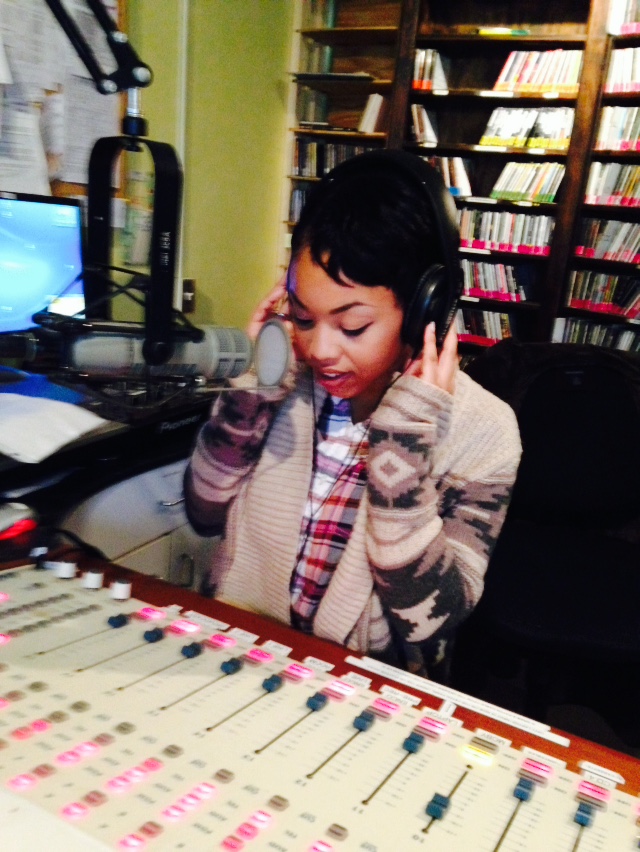
Shekeyah Hayes, student from Virginia Union University, talks about the prevalence and impact of domestic violence on campus.
Virginia Family Violence & Sexual Assault Hotline 1-800-838-8238
The Virginia General Assembly regular session ended on February 28, 2015. Below is an update on the Virginia Sexual and Domestic Violence Action Alliance’s (Action Alliance) priorities and other key legislation of interest to our constituency. Legislation that has passed must still be approved by the Governor and may be subject to additional amendments. In most cases, the Governor has until March 29th to act on the legislation. The Governor’s amendments and vetoed legislation will be considered by the General Assembly during the reconvened session in April.
When available, we have noted the Action Alliance’s position on the legislation. For actual votes and language of the bills, please click on the link provided. Please note that we only provided links to legislation that is still active. Unless noted in the law, legislation becomes effective July 1, 2015.
PASSED LEGISLATION AWAITING GOVERNOR’S APPROVAL
Crime Commission—Sexual and Domestic Violence Study
SB1094 (Chief Patron: Sen. Howell)
HB2092 (Chief Patron: Del. Peace; Chief Co-Patron McClellan)
Supported by the Action Alliance. Establishes the Virginia Sexual and Domestic Violence Program Professional Standards Committee and requires the Department of Criminal Justice Services to administer its activities by providing technical assistance and administrative support. This Committee is tasked with establishing voluntary accreditation standards and procedures by which local sexual and domestic violence programs can be systematically measured and evaluated with a peer-reviewed process. An Advisory Committee on Sexual and Domestic Violence is also established and has the responsibility for advising and assisting state and local entities on matters related to the prevention and reduction of sexual and domestic violence and to promote the efficient administration of grant funds.
Campus Response
SB712 (Chief Patron: Senator Black; Chief Co-Patrons: Senators Deeds, Saslaw, & Barker)
HB1930 (Chief Patron: Delegate Bell; Chief Co-Patrons: Delegates Albo & Gilbert)
Supported by the Action Alliance.
Requires any responsible employee of a public or private nonprofit institution of higher education who in the course of his employment obtains information that an act of sexual violence has been committed against a student or on campus property or other property related to the institution to report such information to the Title IX coordinator for the institution as soon as practicable. The bill provides several exceptions to the reporting requirements, including when information is obtained through any communication considered privileged under state or federal law, including communications received by licensed health care professionals, counselors, accredited rape crisis or domestic violence counselors, campus victim support personnel, clergy, or attorneys.
The Title IX Coordinator must report such information to a review committee, which shall meet within 72 hours of the receipt of information of an alleged act of sexual violence. The review committee shall include the Title IX coordinator, a representative of law enforcement, and a student affairs representative and conduct its review in compliance with federal privacy laws that protect student privacy. The Title IX Coordinator must disclose information regarding the alleged act of sexual violence, including personally identifiable information, to the law-enforcement agency responsible for investigating the alleged act if the Title IX Coordinator determines such disclosure is necessary to protect the health and safety of the community.
The bill requires the governing board of each public or private institution of higher education to (i) establish a written memorandum of understanding with a local sexual assault crisis center or other victim support service and (ii) adopt policies to provide victims with information on contacting such center or service.
The bill also provides that each institution shall ensure that a victim of an alleged act of sexual violence is informed of (i) the applicable federal or state confidentiality provisions that govern information provided by a victim; (ii) the available on-campus resources and any unaffiliated community resources, including sexual assault crisis centers, domestic violence crisis centers, or other victim support services; (iii) the importance of seeking appropriate medical attention; (iv) the importance of collection and preservation of evidence; (v) the available law-enforcement options for investigation and prosecution; (vi) the available options for a protective order; (vii) the available campus options for investigation and adjudication under the institution’s policies; and (viii) the victim’s rights to participate or decline to participate in any investigation to the extent permitted under state or federal law.
HB1785 (Chief Patron: Delegate Massie; Co-Chief Patron: Delegate Filler-Corn).
Supported by the Action Alliance. Requires that mutual aid agreements between a campus police force and a law-enforcement agency contain provisions requiring either the campus police force or the agency with which it has established a mutual aid agreement to notify the local attorney for the Commonwealth within 48 hours of any investigation involving felony criminal sexual assault occurring on campus property or other property related to the institution of higher education. The bill does not require law enforcement to disclose the victims’ personally identifying information. The bill also requires institutions of higher education that have security departments instead of campus police forces to enter into a memorandum of understanding with a law-enforcement agency and such memorandum of understanding shall contain similar provisions requiring reports to the local attorney for the Commonwealth.
SB1193 (Chief Patron: Senator Norment; Co-Chief Patron Senator Deeds)
Requires the registrar of certain public and private institutions of higher education, or the other employee, office, or department of the institution that is responsible for maintaining student academic records, to include a prominent notation on the transcript of each student who has been suspended for, has been permanently dismissed for, or withdraws from the institution while under investigation for a violation of the institution’s code, rules, or set of standards governing student conduct. The bill provides that any notation due to a student’s suspension shall be removed if the student completed the term of the suspension and any conditions thereof and has been determined by the institution to be in good standing. The bill exempts the Virginia Military Institution (VMI).
Domestic Violence/Sexual Assault/Stalking/Protective Orders
SB941 (Chief Patron: Senator Stuart)/HB2329 (Chief Patron: Delegate Simon)
Supported by the Action Alliance. Provides for the compensation of counsel or a guardian ad litem for the required representation of a respondent in a proceeding for the issuance of a protective order under Chapter 9.1 of Title 19.2.
HB2120 (Chief Patron: Delegate Cline)
Supported by the Action Alliance. Adds strangulation to the list of crimes charged for which there is a rebuttable presumption against admission to bail.
SJ245 (Chief Patron: Senator Favola)/HJ600 (Chief Patron: Delegate Kory)
Supported by the Action Alliance. Designates the month of April, in 2015 and in each succeeding year, as Sexual Assault Awareness Month in Virginia.
SB1187 (Chief Patron: Senator Obenshain)/HB 1928 (Chief Patron: Delegate Bell)
The bill adds to the list of offenses for which an adult convicted of certain offenses must have a sample of his blood, saliva, or tissue taken for DNA analysis. The bill adds misdemeanor violations of §§ 16.1-253.2 (violation of a protective order), 18.2-60.3 (stalking), 18.2-60.4 (violation of a stalking protective order), 18.2-67.4:1 (infected sexual battery), 18.2-102 (unauthorized use of animal, aircraft, vehicle, or boat valued at less than $200), 18.2-121 (entering property of another for purpose of damaging it), 18.2-387 (indecent exposure), 18.2-387.1 (obscene sexual display), and 18.2-479.1 (resisting arrest). Under current law, a sample is taken for DNA analysis from adults convicted of only five misdemeanor sex offenses: (i) § 18.2-67.4 (sexual battery), (ii) § 18.2-67.4:2 (sexual abuse of a child 13 years of age or older but under 15), (iii) § 18.2-67.5 (attempted sexual battery), (iv) § 18.2-130 (peeping), or (v) § 18.2-370.6 (penetrating the mouth of a child under 13 with the tongue). The bill also increases the fee collected for the withdrawal of the DNA sample from $25 to $53. The provisions of the bill apply only to persons convicted on or after July 1, 2015.
SB1417 (Chief Patron: Senator Petersen)
Requires any person licensed by the Board of Counseling and operating in a nonhospital setting to post a copy of his license in a conspicuous place. The posting shall also provide clients with (i) the number of the toll-free complaint line at the Department of Health Professions, (ii) the website address of the Department for the purposes of accessing the licensee’s record, and (iii) notice of the client’s right to report to the Department if he believes the licensee may have engaged in unethical, fraudulent, or unprofessional conduct.
HB1558 (Chief Patron: Delegate Rust)
Allows for the creation of local or regional adult fatality review teams upon the initiative of any local or regional law-enforcement agency, department of social services, emergency medical services agency, attorney for the Commonwealth’s office, or community services board. The bill provides that such teams may review the death of any person age 60 years or older, or any adult age 18 years or older who is incapacitated, who resides in the Commonwealth and who is in need of temporary or emergency protective services (i) who was the subject of an adult protective services or law-enforcement investigation; (ii) whose death was due to abuse, neglect, or exploitation or acts suggesting abuse, neglect, or exploitation; or (iii) whose death came under the jurisdiction of or was investigated by the Office of the Chief Medical Examiner as occurring in any suspicious, unusual, or unnatural manner. A violation of the confidentiality of the review process is punishable as a Class 3 misdemeanor.
HB1698 (Chief Patron: Delegate Wilt)
Requires each school board, in any case in a questionnaire or survey requesting that students provide sexual information, mental health information, medical information, information on student health risk behaviors, other information on controlled substance use, or any other information that the school board deems to be sensitive in nature is to be administered, to give the parent 30 days’ written notice of the nature and types of questions, the purposes and age-appropriateness of the questionnaire or survey, how such information will be used, who will have access to such information, the steps that will be taken to protect student privacy, and whether and how any findings or results will be disclosed. The bill gives the parent the right to request that an advance copy of the questionnaire or survey be sent to him, to review the document in person at the school, and to exempt his child from participation. Under current law, (i) such written notice only applies to surveys or questionnaires on sexual information and information on student health risk behaviors, (ii) the detailed contents of the notice only apply to information on student health risk behaviors, and (iii) the parent has the right to review questionnaires and surveys but no right to request that a copy be sent to him.
Human Trafficking
HB2040 (Chief Patron: Delegate Bell)
Supported by the Action Alliance. Increases from a Class 4 felony to a Class 3 felony the penalty for taking a minor, for the purposes of prostitution, into a bawdy place; persuading, encouraging or causing a minor to enter a bawdy place; or taking or causing a minor to be taken to any place for such purposes.
SB1188 (Chief Patron: Senator Obenshain; Chief Co-Patron Senator Edwards)
HB1964 (Chief Patron: Delegate Hugo; Chief Co-Patrons: Delegates Anderson, Rob Bell, and Gilbert)
Supported by the Action Alliance. Creates new felonies for trafficking of persons for commercial sexual activity. The bill provides that any person who solicits, invites, recruits, encourages, or otherwise causes or attempts to cause a person to engage in prostitution with the intent to receive money or other valuable thing or to assist another in receiving money or other valuable thing from the earnings of the solicited person from an act of prostitution is guilty of a Class 5 felony. Felonies are increased if such behavior is done by an adult and the person solicited is a minor (Class 3 felony) and if force, intimidation, or deception is used against the person solicited (Class 4 felony). The new crime was added to the definition of violent felony for the purposes of the sentencing guidelines, predicate criminal acts for street gangs, the Virginia Racketeer Influence and Corrupt Organization Act, multijurisdiction grand jury, and asset forfeiture and, if a minor is solicited, the Sex Offender Registry. The bill also amends two existing Code sections on receiving money for procuring a person for prostitution and receiving money from the earnings of a person engaged in prostitution to increase penalties if the crime involves a minor.
DEFEATED LEGISLATION
Funding Increase for Sexual Assault Victim Services
Budget Amendments #389 1s (Senator Vogel) & #389 1h (Chief Patron: Delegate Peace)
Employment Protections for Victims
SB 990 (Chief Patron: Senator Lucas)/HB1945 (Chief Patron: Delegate McClellan)
HB1430 (Chief Patron: Delegate Herring)
HB2150 (Chief Patron: Delegate Yancey)
Firearm Restrictions Related to Domestic Violence, Sexual Assault, and Stalking
SB943 (Chief Patron: Senator Favola)/HB 2085 (Chief Patron: Delegate Murphy)
SB909 (Chief Patron: Senator Howell)/HB 2045 (Chief Patron: Delegate Filler-Corn)
HB2328 (Chief Patron: Delegate Simon)
Stalking
SB1297 (Chief Patron: Senator McEachin)/HB1453 (Chief Patron: Delegate Miller)
HB1902 (Chief Patron: Delegate Lopez)
To learn more about any of these defeated bills, please visit http://lis.virginia.gov/ and click on “Bills & Resolutions” to search by bill number.
If you have questions, please contact Kristine Hall at khall@vsdvalliance.org or 804-377-0335.
About the Action Alliance
The Action Alliance has been Virginia’s leading voice on sexual and domestic violence for 30 years and enhances response and prevention efforts through training, public policy advocacy, public awareness programs, and technical assistance to professionals. To find out more about the Action Alliance, call 804.377.0335, e-mail:info@vsdvalliance.org, or visit us on the web: www.vsdvalliance.org. You may also call the Virginia Family Violence & Sexual Assault Hotline at 1-800-838-8238 (v/tty).

Today’s show is an hour long special. Becky Lee and Carol Ann Lajoie of the YWCA of Richmond talk about upcoming campaigns, the state of funding in Virginia and their new regional collaborative hotline.
You can listen to the episode here
Resources:
Show is broadcast on WRIR 97.3 FM and streamed at wrir.org
Today Barack Obama published a proclamation about Domestic Violence. While it is always nice to have your President publicly support efforts to end domestic violence, I do wish it was something that was said everyday as it is a daily problem. I have included excerpts below. You can read the entire proclamation here.
Presidential Proclamation
Domestic violence affects every American. It harms our communities, weakens the foundation of our Nation, and hurts those we love most. It is an affront to our basic decency and humanity, and it must end. During National Domestic Violence Awareness Month, we acknowledge the progress made in reducing these shameful crimes, embrace the basic human right to be free from violence and abuse, and recognize that more work remains until every individual is able to live free from fear.
Last month, we reached the 20th anniversary of the Violence Against Women Act (VAWA). This act is helping change the perception of domestic violence and helping communities work toward increasing funding and making changes. Recently two new campaigns:
1 is 2 Many initiative launched by VP Biden. This initiative is going to raise awareness about dating violence. You can see the PSA here
“It’s on Us” campaign – part of the White House Task Force to Protect Students from Sexual Assault to address the intersection of sexual assault and dating violence on college campuses.

Welcome to today’s edition of The V Word.
You can listen to the episode here
Did you stay? Do you stay in a domestic violence relationship? I did and here is why I stayed…..
I stayed because I was told over and over again that no one would ever want me or love me. I stayed because he drove us so far into debt that I could not afford to leave. I stayed because he held a gun on me to keep me from leaving the house. I stayed because he separated me from all of my friends. I stayed until I had nothing left to lose and it took the police arresting him to get people to believe me, well a few people believed me.
The hashtag #WhyIStayed, started by American author Beverley Gooden, herself a former victim of domestic violence, to encourage women to tell their stories and help others understand why they felt unable to leave a violent, or controlling, partner, has been trending since the insensitive comments made by Fox News presenter. Brian Kilmeade, in discussing a video of Ray Rice knocking is his fiancée unconscious in February, made the statement that women who remain with abusive partners send a “terrible message” to others in the same position. In this same segment he mocked the survivor stating “I think the message is to take the stairs” and his cohost said ““The message is, when you’re in an elevator, there’s a camera.” These two statements once again putting all the blame on the victim and no accountability on the abuser. During the same time Ray Rice and his now wife held a press conference where she apologized for her role that night. These are all examples of our culture of blaming the victim instead of blaming the person committing the crime.
This created a firestorm on social media, with thousands of responses across twitter, tumblr and facebook, along with numerous bloggers and journalists discussing the dynamics of why people stay in domestic violence relationships.
There are many reasons why women remain trapped in abusive relationships… threats by the abuser to kill them if they leave are common and violence escalating to killings is common…Did you know that lethality increases when a woman tries to leave? Separation from friends, family and support systems are frequent tactics by the abuser and have a significant impact on survivor’s ability to leave and find safe places to go to…friends, family, and law enforcement may not believe the victim or understand the seriousness, leaving the victim more vulnerable than before…pets and children are often used as hostages with threats to harm them and pets often are harmed or killed as an intimidation tactic…to control and prevent the victim from leaving.
Along with #WhyIStayed came is #WhyILeft – where survivors gave both why they stayed and why they left, providing very poignant responses to what finally helped them to leave.
Instead of asking a person why do they stay, perhaps ask what you could do to make them safer. Is there any thing you could do to help to help them prepare to leave if that is what they choose? You could connect them with resources, give them a hotline number, and be understanding of what they are choosing in order to survive.
Do you need help or information? Here are some options…
If you have been assaulted, call 911.
The Richmond area has a new regional hotline specific to the needs of domestic violence survivors: 804-612-6126
To get a forensic exam to collect evidence and receive medical care, the local hospitals in the Richmond area with Forensic Nurse Examiners are at Medical College of Virginia and St. Mary’s Hospital.
For help with counseling and advocacy, local rape crisis centers, child advocacy centers and domestic violence shelters can provide services. To find a center closest to you… you can call the Virginia Family Violence and Sexual Assault Hotline at 1-800-838-8238.
Are you a family member or a bystander and want know how you can help?
For information on how to report an assault in the Richmond, Virginia, USA are, you can call the non-emergency line at 804-646-5100 or go by a local police station office. The main Richmond office is located at 200 East Grace Street.
Get involved with your local domestic violence shelter to join a group or service that is available. Donate to funds services that help women recovery and restart their lives.
Want to share a story or ask a question? Email me at thevword.radio@gmail.com or tweet me at my twitter account: @preventviolence. You can read the transcript for this show and past shows on my blog at www.thevword.org
The V Word is recorded in the studios of WRIR-LP 97.3 and streamed at wrir.org, read and produced by Carol Olson. Today’s episode was written by Jennifer Gallienne and Carol Olson. Music was created by The Etching Tin.
Welcome to today’s edition of The V Word.
https://soundcloud.com/carol-ann-olson/the-v-word-dv-in-lesbian-relationships-aired-june-16-2014
A twitter follower asked that I talk about domestic violence between gay couples. She is a survivor and feels there is no enough information about interpersonal violence between same-sex couples.
She writes “I came out when I was a young adult, in my early twenties. My first relationship felt secure at first. A safe and understanding person to help me adjust to being open, to navigate all the issues I had to deal with between friends and family and within myself. I didn’t see the inequality in the relationship at first. I didn’t see that the structure in our relationship was actually controlling of me. When it went from emotional to verbal and finally to violence, I finally realized I was in an abusive relationship. It took longer to leave because I was financially dependent by then. I did find a way to end the relationship. Then the next struggle began. I live in an area without many resources and almost none that focus on domestic violence in lesbian relationships. It took awhile for me to find a counselor to help me. What is out there for us?”
Some facts:
Domestic or partner violence in lesbian and gay relationships is considered a silent epidemic. Between 17 – 45 % of lesbian report having experienced domestic violence. Framing domestic violence as something that only happens between heterosexual couples does a disservice to abuse in lesbian and gay couples.
Partner violence in any coupling has similarities: The abuser wants to gain and maintain control and to avoid feelings of loss and abandonment. However, there are some differences. A unique element for lesbians is the presence of a homophobic environment. Susa Rose of the National Violence Against Women Research Center, reports that this enables the abusive partner to exert “heterosexist control” over the victim by threatening to “out” the victim to friends, family, or employer or threatening to make reports to authorities that would jeopardize child custody, immigration, or legal status. The homophobic environment also makes it difficult for the victim to seek help from the police, victim service agencies, and battered women’s shelters.
How can you help?
To support a lesbian who is the target of partner violence:
Let her know that she can call you for help. Help her develop a safety plan concerning how she will get out if she needs to leave quickly, including having a bag prepared and easily accessible with essential documents (including identification, money, and anything else that might be needed), and arranging a place to stay in an emergency. Give her the keys to your house. Do not give up and do not criticize her or turn her away because she does not leave right away.
If you are in a city that has an Anti-Violence Project connected to the National Coalition of Anti-Violence Programs (http://www.avp.org), tell her about the services of your local AVP. Many AVPs provide counseling, advocacy with the police and criminal justice system and support groups.
Help her find a therapist that specializes in lesbian partner abuse.
For help or information? Here are some options…
If you have been raped, call 911 and go to the nearest emergency room.
For information on how to report in the Richmond, Virginia, USA are, you can call the non-emergency line at 804-646-5100, that is 804-646-5100 or go by a local police station office. The main Richmond office is located at 200 West Grace Street.
To get a forensic exam to collect evidence and receive medical care, the local hospitals in the Richmond area with Forensic Nurse Examiners are at Medical College of Virginia and St. Mary’s Hospital.
For those in Virginia who identify as lesbian, gay, bisexual, transsexual, and queer or questioning, you can access a free and confidential telephone service called The LGBTQ Partner Abuse and Sexual Assault Helpline at 1.866.356.6998 Monday through Friday, 8 am to 8 pm for help regarding intimate partner abuse, sexual assault, and stalking. The Virginia Anti-Violence Project at virginiaavp.org stands ready to work with anyone who wants to address anti-LGBTQ violence in Virginia and to help build safe communities. The number again is: 1.866.356.6998.
For listeners from outside of Virginia: GLBT National Hotline @ 1-888-843-4565 or go to GLNH.org/hotline/
For help with counseling and advocacy, local rape crisis centers and domestic violence shelters can provide services. To find a center closest to you… you can call the Virginia Family Violence and Sexual Assault Hotline at 1-800-838-8238. That is the Virginia Family Violence and Sexual Assault Hotline at 1-800-838-8238.
Want to share a story or ask a question? Email me at thevword.radio@gmail.com or tweet me at my twitter account: @preventviolence. You can read the transcript for this show and past shows on my blog at www.thevword.org
The V Word is recorded in the studios of WRIR-LP 97.3, read and produced by me, Carol Olson.
 Carol Olson
 Jenn
Jenn The V Word